The option quarterback is really like no other position in football. For most quarterbacks, they simply have the job of handing the football off in the run game. The passing game is where they must make reads, sight adjustments and distribute the ball according to the defense they are seeing. In option offenses, the quarterback must be able to distribute the ball in both the running and the passing games. This factor makes the coaching of an option quarterback just that much more intensive to the coach. No stone can be left unturned when teaching the mechanics of the game to the option quarterback.
To Mesh or Not to Mesh
To start, there are two distinct schools of thought in option football on how to read the handoff key (HOK). The first, and probably one of the oldest is the famous "Ride and Decide" (R&D). There have been many modifications to this technique over time, and every option coach you talk to has their own unique spin on this technique. There is also the "No Mesh Mesh", or "Point Method" of reading the HOK. Each technique has its merits, the coach has to decide what they want to teach and what they think fits their situation the best. The pros to R&D are:
- Very very deceptive to the defense. It is difficult for defenders to get an accurate read on who has the football due to the length of the ride by the quarterback.
- Slows the read down for the quarterback. Young quarterbacks especially like the technique because it allows them feel more comfortable with the read.
On the flip side, the cons to R&D are:
- The technique can be labor intensive to coach. The footwork is more precise and the arm mechanics much more precise than the Point Method.
- Turnovers. The traditional mesh lends itself to more turnovers between the dive back and quarterback due to the ball placement and long duration that two players are in contact with the same football.
- When pulled, the quarterback isn't always running or facing downhill. Most who run this offense are doing so because they don't have the dominant line to block many of their opponents, so having the quarterback coming off the mesh, into the backfield can be an issue. Many option coaches say this can't happen, but it does when using R&D, especially vs. blood stunts where the quarterback must pull the ball quickly.
The Point Method is regarded by many as a technique for the Split Back Veer (SBV) offense. Flexbone "purists" state that it will not work when the dive back is behind the quarterback like they are in the flexbone. This, quite simply, is not true. The Point Method has these distinct advantages over the R&D method:
- Simple. It is a very simple technique to teach, and can be taught relatively quickly. There is no "feel" involved, only the read. The footwork is less intensive than R&D and can actually be a bit "sloppier" (for lack of a better term) than traditional R&D.
- Turnovers. The Point Method leads to very few turnovers in this offense. The reads are clear and concise and the only time there is contact between the dive back and quarterback is if the ball is going to be handed off.
In today's world of "win now", I prefer to use the Point Method. It is generally quicker to install, takes less time to master, and is less turnover prone than R&D.
Stance
The option quarterback should begin in a balanced stance, as shown in figure 12-1. Since the quarterback doesn't want to tip off the defense as to the direction of the play, it is quite important to not allow them to stagger their feet in their stances. The weight of the quarterback is balanced over a slightly narrower than shoulder-width stance. The quarterback's head should break the belt of the center as pressure is applied in an upward force by the quarterback's arms into the groin of the center. There are many thoughts of the positioning of the hands, but I prefer to have the quarterbacks lock thumbs to keep any separation of the hands from happening. The most important thing is this, the quarterback should be in a comfortable position that allows them to execute their technique.

Footwork
The option quarterback should begin in a balanced stance, as shown in figure 12-1. Since the quarterback doesn't want to tip off the defense as to the direction of the play, it is quite important to not allow them to stagger their feet in their stances. The weight of the quarterback is balanced over a slightly narrower than shoulder-width stance. The quarterback's head should break the belt of the center as pressure is applied in an upward force by the quarterback's arms into the groin of the center. There are many thoughts of the positioning of the hands, but I prefer to have the quarterbacks lock thumbs to keep any separation of the hands from happening. The most important thing is this, the quarterback should be in a comfortable position that allows them to execute their technique.

Figure 12-1 (balanced stance)
Footwork
The quarterback position, in any offense, demands time and effort put into the footwork. The flexbone takes no exception to this rule. The flexbone, may even be more footwork heavy of an offense compared to others. The footwork in this offense is generally based upon whether you choose to mesh or not mesh with the dive read. The key to teaching the footwork of the offense to the quarterback is to utilize a clock (see figure 12-2). This way you can direct the feet of the quarterback to where they need to be headed. When talking with the quarterback, speak in a manner such as "Step at 3 o'clock with your first step", as this will teach the player to point the toes in direction you choose. This method aids with communication. What you will be surprised at is how many of your kids have never studied the face of a clock! Be sure to educate them on what you're asking them to do.

Figure 12-2 (clock used for footwork teaching)
A large component of the footwork in the flexbone offense, deals with weight transfer. When teaching the reads such as midline and veer, the quarterback has to properly transfer the weight from one foot to another so that if the ball is pulled, the quarterback is in a position to attack the defense downhill. Improper weight transfer leads to the quarterback "bowing" or "bending" into the backfield coming off of the mesh. Improper footwork can lead to slow meshes as well as lost yardage on plays.
Preferentially start with veer footwork and work from there. For the Inside Veer (ISV), the quarterback if using R&D will step at either 3 o'clock, or 9 'o clock, depending on the direction of the play. The weight transfer should go to the leg that steps first. Once this step is in the ground, it is important that the quarterback get the second step down quickly. The second step, will come down, parallel to the first. As the quarterback meshes with the dive back the weight transfers from the back leg to the front leg. When doing drills, make sure when the quarterback takes their steps you actually see a bit of a "lean" to them. In other words, they should lean slightly in drills to over exaggerate this weight transfer. Some purists of the offense teach the "hop" method of getting into position. This method is utilized by both Navy and Georgia Tech when teaching their quarterbacks. The method is simple, basically instead of two steps, the quarterback pushes off with the foot opposite the direction they are going (i.e. if heading right, then they push off with the left foot) and basically jumps or "hops" into the A gap in the direction of the play. The coach, if using the hop technique will have to pay very close attention to the weight transfer of his quarterback. What I have found when utilizing the hop is that the players like it because of its quickness to get them to the read, but tend to end up with their weight on their heels. What this effect does is make the quarterback slower coming out of the mesh. Care has to be made to keep them on the balls of their feet and executing the proper weight transfer.

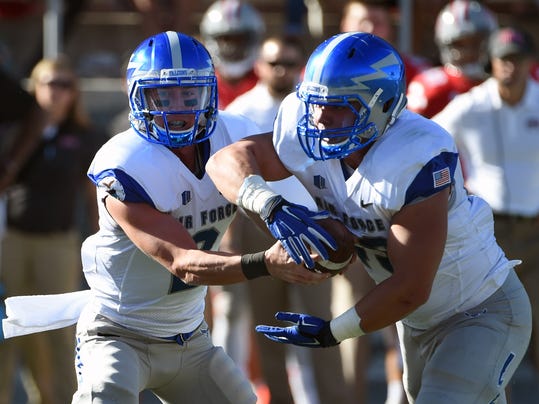
The point method is similar to R&D but the footwork is pushed forward a bit more. The reason for this is that Point Method quarterbacks need to make the read up into the line, rather than behind it. On the clock, when running triple, the quarterback would step as one should drive a car; at two and ten o'clock. This first step puts the quarterback heading "downhill" or attacking into the line of scrimmage (LOS). The second step ends up parallel to the first. Since there is no mesh, there is no lateral weight transfer to worry about. All the coach needs to be sure of is that the quarterback is on the balls of his feet.
For midline, the coach would simply do the technique listed above for R&D or Point Method and do it in reverse. Instead of the quarterback gaining ground, they are losing ground to get out of the way of the dive back.


A key point to tell if your quarterback is going to mesh properly with their footwork is where the ball is once they've taken their first two steps. For the triple, if the ball were dropped from the quarterback's hands once his second step hit the ground it should hit the offensive guard (OG) right in the middle of the buttocks. As shown in Figure 12-3, this is the aiming point for the dive back. If the ball isn't there, then adjust the steps accordingly. This is why the use of fire hose or football tape is so imperative when teaching the offense. The marks representing the OL can be moved to exactly match where these landmarks are to aid in teaching the proper steps. For midline, the ball, if dropped after the second step is in the ground, would hit the center right down the middle of the buttocks. Again, this positioning of the football is so that the dive back can run right over the top of the football and does not have to worry about adjusting his course during the play.

One-Way Though Process
The One-Way Thought Process is the basis for the mental training of an option quarterback. This type of thinking can be utilized on almost EVERY read the quarterback makes. The simplicity of the system is that the quarterback already knows what he's going to do, despite the play being an option play. To teach this system of thought, you simply ask your quarterback, how many times they would expect to get their read right if they simply guessed. The answer is, about 50 percent. Of course this is in theory, and in no way am I suggestion guessing, but as the coach, you have to find a way to make the complicated read seem simple so that you slow down time for your option quarterback. You do this, by giving him a one-way thought process, as well as giving him the idea that there is no pressure. Furthermore, you tell the quarterback that all we expect from him, is to get half again as many as he guessed right, correct in order to be an effective option quarterback. What this does, is tell your high school sophomore, that if he guesses, he'll be over 2/3's on his way to a good read score, and that all he has to do to get a better score is get 25% more correct. Again, this is not suggesting he guess, but showing the quarterback that even if you guess, your at the 67 percent success rate for your overall read score of 75 percent.

The entire idea of the one-way thought process is to take pressure off of your quarterback. In many cases this could be a JV freshman learning the offense for the first time, or a converted senior wide receiver who's never taken a snap under center. The one-way thought process speeds up the mastery of the read in option football. Once you have the quarterback with some confidence, you can now give him is one-way ultimatum. This teaching should begin with the dive read on ISV. The thought process begins by telling the quarterback, to give the football every time, unless the HOK makes a move to tackle the dive back. The actual read is of no importance in this portion of training your quarterback. Quite simply put, keep telling your quarterback the "give unless" statement, as many times as you can during practice. By teaching the one-way thought process you give your quarterback a security blanket. This is something that when the bullets are flying, he can still fall back on and rely on. The quarterback knows what he's doing when he squares up and gets under center.
The one-way thought process transfers to all applications within the flexbone offense where the quarterback must make a read. This process can even be utilized in the passing game. The process can be altered as well to get the ball to certain players as well. For instance, if a team if forcing the quarterback to keep the football, or you as the coach think that the pitch will still out leverage the defense, you can reverse the base, one-way thought process of the pitch phase. The basic way of teaching the one-way thought process for the pitch is to run for a touchdown every time unless the pitch key (PK) steps to me. If you as a coach, change the blocking scheme in order to get the ball pitched, you need to change the quarterback's mentality on the play as well. Many coaches would say this is too much thinking for a young man to do, but this is simply not true as long as you use a one-way thought process. For reversing this process, the coach might say, pitch the ball every time unless the PK steps away from you. What this change does, is get your quarterback thinking pitch first instead of keep. Again, nothing Earth-shattering here, you are just changing the quarterback's thought process with a simply verbal cue.
One-way thinking is the crux of proper mental training for the flexbone quarterback. This is never more true than when dealing with young quarterbacks. As the coach, you will be looked upon to help your quarterback out in his times of frustration or need, and the one-way thought process will be the bedrock in your teaching foundation.
Coaching the Mesh and Other Fine Points of Option Football
Once the stance, mentality and footwork have been mastered, the coach must progress to the rest of the quarterback's body to prepare them to read the option. There are many other facets involved with coaching up the read, and these are the arms and hands, and the head and eyes.
First, is the eyes. The head goes where the eyes go, so the coach can get a two-for-one here. The eyes of the option quarterback must consistently be focused. From pre-snap read to actual reading of the dive and pitch keys, the eyes are the tell-tale factor in a successful option quarterback. Many new quarterbacks are so accustomed to looking at the ball carrier when they hand the ball off they literally have to be broken and retrained to do so by the option coach. It is imperative that the quarterback get his eyes on the read pre-snap. This does not, however, mean that the quarterback stroll to the LOS and stare down the read. As the quarterback scans the offensive and defensive fronts, he must be aware of direction of play, and where the read is. Once the quarterback has found the read, he must keep this player in his peripheral field of vision at all times.
Once the ball is snapped, the eyes must go directly to the read. The most successful key I've ever taught is the read key's far ear hole. What I have taught is to give the ball every time unless that far ear hole makes a move to take the dive back. Again you can see the one-way thought process being utilized, but now being taught with the read. If the read key does anything other than tackle the dive back, the quarterback will give the football.

The eyes aren't just coached in the dive phase of the triple option either. The pitch phase is just as important on the eyes as is the dive phase. Once the quarterback has pulled the football, and is now attacking the option alley, he must find his PK. Again, this should have been determined pre-snap, but the coach can have some freedom in setting these reads, which will be discussed at length in a later segment. As the quarterback accelerates into the alley, and the PK is locked on to, the one-way thought process enters the quarterback's mind. The quarterback, initially, should be taught to keep the ball every time unless the PK steps to take the quarterback. The eyes here are important, because in the beginning you want the quarterback to find the near shoulder of his read. As he accelerates toward the read, the focus should now move to the read's feet. If the feet settle, or turn and attack the quarterback, that is when the ball should be pitched. What the coach's goal here is, for the quarterback to see both the shoulder and the feet at the same time. A simple pitch drill involving a pitch back, and a read go a long in teaching this simple process.

Many coaches don't master the hands of a triple option quarterback, only to pay the price in the end with turnovers and sloppy play. When installing an option offense, the hands are the tools that deliver the football, whether it be handing the ball to the B back in the dive phase, or pitching the football. Improper hand placement is the number one cause of turnovers within the flexbone offense.
When the quarterback takes the snap from center, if meshing, the ball should be slightly seated in a manner to allow the center to clear the quarterback's hands. This does not mean that the quarterback brings the ball back into his body in the traditional sense of seating the football. What it means, for the option quarterback is a simple shortening of the length of the arms by bending the arms, only slightly, at the elbow. Once the steps are made, the arm work for the various methods of meshing are a bit different, and both will be discussed.
If meshing, the arms should extend back, much the way a baseball hitter would begin to draw the bat back, prior to swinging at a pitch. The arms are locked, but not rigid. The ball should be in both hands of the quarterback, with the full contact of the palm of each hand on the ball. An important note here is that the position of the laces does not matter for the mesh. As the quarterback is taking his steps, and swinging the ball back, the eyes go to the read. The ball, should never be swung any further back than the quarterback's deepest hip. In other words, if running triple to the right, the quarterback should not swing the ball back any further than their right hip. As contact with the B back is made, the quarterback should apply no pressure to the B back's midsection. The quarterback's arms should move in succession with the movement of the B back, as the quarterback is making the read. If a give read is made, the quarterback should stiffen the upfield arm and apply pressure to the midsection of the dive back, thereby seating the football into the pocket of the back. The back hand, or off hand comes off the ball first, followed by the front had. The front hand is the most important hand, as the quarterback should maintain pressure all the way through mesh, until the B back has cleared the quarterback's front side hip. If a pull read is made, the quarterback applies no pressure at all to the dive back, and will re seat the football back into the midsection of the quarterback, keeping the ball from interfering with the path of the B back. Once the B back has cleared the quarterback the ball will be raised from the midsection of the quarterback to right in front of the chest around the top of the numbers on the quarterback's jersey.

If not meshing, the technique is a bit simpler to teach. Once the first steps are made, the quarterback will actually, physically point the football at the read key. The quarterback should look right down their forearms and focus on the read as shown in Figure 12-4. If the HOK gives a handoff read, then the quarterback stiffens the front arm as the dive back runs over the top of the football. If the quarterback gets a pull read, the ball is quickly reseated into the midsection and the same manner as meshing is used to move on the pitch phase of the triple option. An important coaching point in teaching the Point Method is this. If the dive back feels the football, he is to take it. If the quarterback feels the dive back he is to give it. This technique, does reduce the overall deception of the play a bit, but reduces the potential for turnovers in the mesh. Turnovers must be minimized, there are ways around the play not being as deceptive.

When pitching the football, there are numerous methods of getting this task accomplished. The most important factor is quarterback comfort. Most quarterback's, especially young ones, have a fear of parting with the football, especially if it involves reading and pitching. The quarterback, has to be comfortable in what he's doing in order to effectively master the offense. Players that have small hands, should use what is known as a basketball pitch. As the quarterback attacks the pitch key and gets a pitch read, they will roll the ball over in a manner that resembles a basketball player taking a shot (Figure 12-5). For instance, running triple to the right, the quarterback would roll the ball left so that his right hand was now facing outward (remember the ball is at the quarterback's chest in all of this). The off hand is just like the shooter's hand in basketball. The hand is there merely for support and as a guide. The quarterback should step in the direction of the pitch back, and then flick the wrist and hand in a manner to spin the ball, much like a kickoff would look. What this does is create an end-over-end pitch that is soft and easy for the pitch back to handle. The reason smaller handed players should use this method is the control they have over the football when doing so.

If the player has sufficiently sized hands, the coach can teach a more traditional method of pitching the football. This method, again begins with the football at the quarterback's chest. As per Figure 12-6, the hands, however, are placed higher than if doing the basketball pitch. The hands should be in the upper 1/3 of the football near the where the stripe is on many footballs. This landmark can vary due to hand size, but the hands must be on the upper 1/2 of the football. As the quarterback makes his pitch read, he will step in the direction of the pitch, releasing the ball with his off hand (in our example of running triple to the right, this would be the quarterback's left hand) and extend his arm nearest the pitch back. The quarterback should push outward from his chest and at full extension of the arm, flick the wrist, so that the thumb ends up pointing downward. The method of pointing the thumb gets the ball rotating similar to the basketball pitch, much in the same manner as a kickoff.

When pitching, the arm nearest the pitch back should always end up being pointed in the direction of the pitch back (see Figure 12-7). Thing of a shooter in basketball following through with his shot. The shooting hand would end up pointing to the basket. This is exactly the same for the quarterback's pitch hand. Lack of this technique is easy to spot, because the direction of the pitch will be off target.

Another key component of teaching the pitch is teaching protection. Defensive coordinators (DC's) are generally on high aggravation having only a week of preparation for an offense they rarely see, so one of their finer coaching points is to hit the quarterback on every option play. The option quarterback must know he's a marked man from the get-go, and you as the coach, must teach him how to effectively protect himself. When pitching, this all comes back to the footwork on the quarterback. As the quarterback takes his step to the pitch back and pitches the football, he should, follow through with his second step and turn away from the attacking pitch key. What ends up happening is the quarterback runs a sort of semi-circle that keeps him from a truly devastating blow by an unblocked defender. Even if contact is made, the quarterback is protected because he's moving with the defender instead of against the defender. Every effort should be made to teach this method of protection because losing the quarterback to injury is a blow to any offense.
Some of the finer points in coaching the triple option when dealing with a quarterback is to preach axioms. These are as follows:

Figure 12-3 (Midline and Veer aiming points for the B back)
One-Way Though Process
The One-Way Thought Process is the basis for the mental training of an option quarterback. This type of thinking can be utilized on almost EVERY read the quarterback makes. The simplicity of the system is that the quarterback already knows what he's going to do, despite the play being an option play. To teach this system of thought, you simply ask your quarterback, how many times they would expect to get their read right if they simply guessed. The answer is, about 50 percent. Of course this is in theory, and in no way am I suggestion guessing, but as the coach, you have to find a way to make the complicated read seem simple so that you slow down time for your option quarterback. You do this, by giving him a one-way thought process, as well as giving him the idea that there is no pressure. Furthermore, you tell the quarterback that all we expect from him, is to get half again as many as he guessed right, correct in order to be an effective option quarterback. What this does, is tell your high school sophomore, that if he guesses, he'll be over 2/3's on his way to a good read score, and that all he has to do to get a better score is get 25% more correct. Again, this is not suggesting he guess, but showing the quarterback that even if you guess, your at the 67 percent success rate for your overall read score of 75 percent.

The entire idea of the one-way thought process is to take pressure off of your quarterback. In many cases this could be a JV freshman learning the offense for the first time, or a converted senior wide receiver who's never taken a snap under center. The one-way thought process speeds up the mastery of the read in option football. Once you have the quarterback with some confidence, you can now give him is one-way ultimatum. This teaching should begin with the dive read on ISV. The thought process begins by telling the quarterback, to give the football every time, unless the HOK makes a move to tackle the dive back. The actual read is of no importance in this portion of training your quarterback. Quite simply put, keep telling your quarterback the "give unless" statement, as many times as you can during practice. By teaching the one-way thought process you give your quarterback a security blanket. This is something that when the bullets are flying, he can still fall back on and rely on. The quarterback knows what he's doing when he squares up and gets under center.
The one-way thought process transfers to all applications within the flexbone offense where the quarterback must make a read. This process can even be utilized in the passing game. The process can be altered as well to get the ball to certain players as well. For instance, if a team if forcing the quarterback to keep the football, or you as the coach think that the pitch will still out leverage the defense, you can reverse the base, one-way thought process of the pitch phase. The basic way of teaching the one-way thought process for the pitch is to run for a touchdown every time unless the pitch key (PK) steps to me. If you as a coach, change the blocking scheme in order to get the ball pitched, you need to change the quarterback's mentality on the play as well. Many coaches would say this is too much thinking for a young man to do, but this is simply not true as long as you use a one-way thought process. For reversing this process, the coach might say, pitch the ball every time unless the PK steps away from you. What this change does, is get your quarterback thinking pitch first instead of keep. Again, nothing Earth-shattering here, you are just changing the quarterback's thought process with a simply verbal cue.
One-way thinking is the crux of proper mental training for the flexbone quarterback. This is never more true than when dealing with young quarterbacks. As the coach, you will be looked upon to help your quarterback out in his times of frustration or need, and the one-way thought process will be the bedrock in your teaching foundation.
Coaching the Mesh and Other Fine Points of Option Football
Once the stance, mentality and footwork have been mastered, the coach must progress to the rest of the quarterback's body to prepare them to read the option. There are many other facets involved with coaching up the read, and these are the arms and hands, and the head and eyes.
First, is the eyes. The head goes where the eyes go, so the coach can get a two-for-one here. The eyes of the option quarterback must consistently be focused. From pre-snap read to actual reading of the dive and pitch keys, the eyes are the tell-tale factor in a successful option quarterback. Many new quarterbacks are so accustomed to looking at the ball carrier when they hand the ball off they literally have to be broken and retrained to do so by the option coach. It is imperative that the quarterback get his eyes on the read pre-snap. This does not, however, mean that the quarterback stroll to the LOS and stare down the read. As the quarterback scans the offensive and defensive fronts, he must be aware of direction of play, and where the read is. Once the quarterback has found the read, he must keep this player in his peripheral field of vision at all times.
Once the ball is snapped, the eyes must go directly to the read. The most successful key I've ever taught is the read key's far ear hole. What I have taught is to give the ball every time unless that far ear hole makes a move to take the dive back. Again you can see the one-way thought process being utilized, but now being taught with the read. If the read key does anything other than tackle the dive back, the quarterback will give the football.
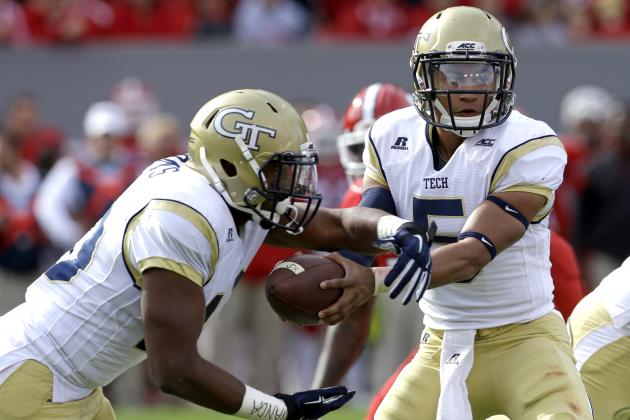
The eyes aren't just coached in the dive phase of the triple option either. The pitch phase is just as important on the eyes as is the dive phase. Once the quarterback has pulled the football, and is now attacking the option alley, he must find his PK. Again, this should have been determined pre-snap, but the coach can have some freedom in setting these reads, which will be discussed at length in a later segment. As the quarterback accelerates into the alley, and the PK is locked on to, the one-way thought process enters the quarterback's mind. The quarterback, initially, should be taught to keep the ball every time unless the PK steps to take the quarterback. The eyes here are important, because in the beginning you want the quarterback to find the near shoulder of his read. As he accelerates toward the read, the focus should now move to the read's feet. If the feet settle, or turn and attack the quarterback, that is when the ball should be pitched. What the coach's goal here is, for the quarterback to see both the shoulder and the feet at the same time. A simple pitch drill involving a pitch back, and a read go a long in teaching this simple process.

Many coaches don't master the hands of a triple option quarterback, only to pay the price in the end with turnovers and sloppy play. When installing an option offense, the hands are the tools that deliver the football, whether it be handing the ball to the B back in the dive phase, or pitching the football. Improper hand placement is the number one cause of turnovers within the flexbone offense.
When the quarterback takes the snap from center, if meshing, the ball should be slightly seated in a manner to allow the center to clear the quarterback's hands. This does not mean that the quarterback brings the ball back into his body in the traditional sense of seating the football. What it means, for the option quarterback is a simple shortening of the length of the arms by bending the arms, only slightly, at the elbow. Once the steps are made, the arm work for the various methods of meshing are a bit different, and both will be discussed.
If meshing, the arms should extend back, much the way a baseball hitter would begin to draw the bat back, prior to swinging at a pitch. The arms are locked, but not rigid. The ball should be in both hands of the quarterback, with the full contact of the palm of each hand on the ball. An important note here is that the position of the laces does not matter for the mesh. As the quarterback is taking his steps, and swinging the ball back, the eyes go to the read. The ball, should never be swung any further back than the quarterback's deepest hip. In other words, if running triple to the right, the quarterback should not swing the ball back any further than their right hip. As contact with the B back is made, the quarterback should apply no pressure to the B back's midsection. The quarterback's arms should move in succession with the movement of the B back, as the quarterback is making the read. If a give read is made, the quarterback should stiffen the upfield arm and apply pressure to the midsection of the dive back, thereby seating the football into the pocket of the back. The back hand, or off hand comes off the ball first, followed by the front had. The front hand is the most important hand, as the quarterback should maintain pressure all the way through mesh, until the B back has cleared the quarterback's front side hip. If a pull read is made, the quarterback applies no pressure at all to the dive back, and will re seat the football back into the midsection of the quarterback, keeping the ball from interfering with the path of the B back. Once the B back has cleared the quarterback the ball will be raised from the midsection of the quarterback to right in front of the chest around the top of the numbers on the quarterback's jersey.

If not meshing, the technique is a bit simpler to teach. Once the first steps are made, the quarterback will actually, physically point the football at the read key. The quarterback should look right down their forearms and focus on the read as shown in Figure 12-4. If the HOK gives a handoff read, then the quarterback stiffens the front arm as the dive back runs over the top of the football. If the quarterback gets a pull read, the ball is quickly reseated into the midsection and the same manner as meshing is used to move on the pitch phase of the triple option. An important coaching point in teaching the Point Method is this. If the dive back feels the football, he is to take it. If the quarterback feels the dive back he is to give it. This technique, does reduce the overall deception of the play a bit, but reduces the potential for turnovers in the mesh. Turnovers must be minimized, there are ways around the play not being as deceptive.

Figure 12-4 (focusing on the read)
When pitching the football, there are numerous methods of getting this task accomplished. The most important factor is quarterback comfort. Most quarterback's, especially young ones, have a fear of parting with the football, especially if it involves reading and pitching. The quarterback, has to be comfortable in what he's doing in order to effectively master the offense. Players that have small hands, should use what is known as a basketball pitch. As the quarterback attacks the pitch key and gets a pitch read, they will roll the ball over in a manner that resembles a basketball player taking a shot (Figure 12-5). For instance, running triple to the right, the quarterback would roll the ball left so that his right hand was now facing outward (remember the ball is at the quarterback's chest in all of this). The off hand is just like the shooter's hand in basketball. The hand is there merely for support and as a guide. The quarterback should step in the direction of the pitch back, and then flick the wrist and hand in a manner to spin the ball, much like a kickoff would look. What this does is create an end-over-end pitch that is soft and easy for the pitch back to handle. The reason smaller handed players should use this method is the control they have over the football when doing so.

Figure 12-5 (shooter's hands)
If the player has sufficiently sized hands, the coach can teach a more traditional method of pitching the football. This method, again begins with the football at the quarterback's chest. As per Figure 12-6, the hands, however, are placed higher than if doing the basketball pitch. The hands should be in the upper 1/3 of the football near the where the stripe is on many footballs. This landmark can vary due to hand size, but the hands must be on the upper 1/2 of the football. As the quarterback makes his pitch read, he will step in the direction of the pitch, releasing the ball with his off hand (in our example of running triple to the right, this would be the quarterback's left hand) and extend his arm nearest the pitch back. The quarterback should push outward from his chest and at full extension of the arm, flick the wrist, so that the thumb ends up pointing downward. The method of pointing the thumb gets the ball rotating similar to the basketball pitch, much in the same manner as a kickoff.

Figure 12-6 (traditional hand placement)
When pitching, the arm nearest the pitch back should always end up being pointed in the direction of the pitch back (see Figure 12-7). Thing of a shooter in basketball following through with his shot. The shooting hand would end up pointing to the basket. This is exactly the same for the quarterback's pitch hand. Lack of this technique is easy to spot, because the direction of the pitch will be off target.

Figure 12-7 (pitching the football)
Another key component of teaching the pitch is teaching protection. Defensive coordinators (DC's) are generally on high aggravation having only a week of preparation for an offense they rarely see, so one of their finer coaching points is to hit the quarterback on every option play. The option quarterback must know he's a marked man from the get-go, and you as the coach, must teach him how to effectively protect himself. When pitching, this all comes back to the footwork on the quarterback. As the quarterback takes his step to the pitch back and pitches the football, he should, follow through with his second step and turn away from the attacking pitch key. What ends up happening is the quarterback runs a sort of semi-circle that keeps him from a truly devastating blow by an unblocked defender. Even if contact is made, the quarterback is protected because he's moving with the defender instead of against the defender. Every effort should be made to teach this method of protection because losing the quarterback to injury is a blow to any offense.
Some of the finer points in coaching the triple option when dealing with a quarterback is to preach axioms. These are as follows:
- Better a wrong read, than a long read
- Give the ball every time unless (one-way thought process)
- Keep the ball every time unless (one-way though process)
- When in doubt, give the football
- Pitch the ball heart to heart (your heart to the pitch back's heart)
- Never pitch in a mess, never pitch in distress
The first one is stolen from triple option coaching great, and father of the Triple Gun Offense, Tony DeMeo. DeMeo, though not a mesh purist, nor a Point Method advocate, had his own unique way of teaching the mesh. He taught his quarterbacks that it was better to have read wrong, than to be stuck in the backfield with a long read. This is a very true point. One of the top reasons coaches move to the flexbone offense is the fact that they lack talent and size along their offensive lines. No reason to ask the those guys to block any longer than they have to. Also, the longer the ball is in the mesh, the more potential there is for trouble, such as fumbles.
The next two axioms have already been discussed at length. The key element here, repetition. The quarterback must know these and hear these two daily. These two statements build trust in the system as well as building confidence in your quarterback.
Number four, is very similar to the one-way thought process, but it's your quarterback's get out of jail free card. When the chips are down, and he seems confused, he should fall back on this axiom. You as a coach can help him out by adjusting line splits, or changing the read for him, but the quarterback should always know what to do, even if he doesn't know what to do. Again, this axiom if for building confidence.
Five is a technical aspect that must be harped upon, by the coach, once the pitch phase of the triple option has been installed. The idea here is that the football stay elevated and have a landmark to be pitched to. The proper placement of the football for the quarterback is in front of the chest, as he attacks the PK. This positioning allows for the quarterback to pitch the ball effectively, as well as protect the football in event of a misread. When teaching the pitch drill, repeat this to your quarterback and even better yet, have them repeat it back to you.
The last axiom is one that involves taking care of the football. We've all seen that option quarterback who, at the last minute, while being tackled, pitches the football to a pitch back who may scamper for a touchdown. Sure, while these make great highlight reels, they are certainly not the norm and are an unnecessary risk. The quarterback, if he feels unnecessary pressure, or finds himself in a misread, should NOT pitch the football. Instead the quarterback is to turn into the LOS and gain what yardage he can gain.
Option Drills and Progression
The first drill I start teaching to my quarterbacks is the footwork drill. No matter what you use, whether it be point method, R&D, hop, the feet are the most important component in your quarterback having success running the flexbone offense. Preferably start with stances, being sure the quarterback has a flat back, and a balanced stance as shown in Figure 12-8.


Other Quarterback Mechanics in the Flexbone Offense
The quarterback in any offense must master handing off the football on non-read plays, passing footwork as well as master audibles and helping get the offense in the right play when necessary. Some of this I will not go into great length in discussing due to the fact that there are already so many good texts out there on the subject. One aspect the flexbone coach must understand, is that some of these skills will not be as hones or polished as a prototypical quarterback due to the nature of the quarterback having to master the reads in the triple option. This is the sort of give-take nature of the offense. Sure, the OL don't have to block certain players, but the trade off is, you're not going to find yourself with a great, polished pocket passer in the process. This can be seen on many a Saturday watching some of the service academies, or Georgia Tech even, and those coaches get to spend much more time with their quarterback than the average high school coach does. It is up to the coach to choose wisely what other concepts they want to put into the offense. Sure we'd all love to have 25 passing concepts in our playbook, to go along with 40 running plays, but the simple fact of the matter is that this will not happen in the flexbone offense.
Teaching the Passing Game
I will not go at length to discuss this, but to expound on the one-way thought process and how it can be utilized in teaching the passing game to your option quarterback. The one-way thought process allows the quarterback coach to be able to simplify the passing game so as to teach the quarterback a simply way of delivering the football based on a quick read. Now, you are not going to get two reads on one passing play. I'm telling you, this is too much to give most quarterbacks in high school, much less one who has to learn to read the midline and triple options as well. A simple way of teaching your passing reads, though, goes right along with the one-way thought process. This process is quite simply done by using one-way thinking on all pass plays. For instance, looking at Veer Pass in Figure 12-12, the quarterback is to read the flat defender. Teach the quarterback a one-way thought process here. What's brilliant about the one-way thought process is that it allows you the coach to control the thinking and reacting of your quarterback. For instance, if you prefer to get the ball to your slots in the passing game, then give the quarterback a one way thought process of "I'm going to fake the ball to the B back and throw to the play side slotback every time unless the flat defender sinks on the snap, to which I will throw the swing route to the pitch back". Again, a one-way thought process that works. The quarterback, who by the time you install the passing game, should be accustomed to finding his pre-snap read, can identify who the flat defender is (usually the PK) and now has a means to react to this players reactions. Like I stated earlier, I'm not going into grave detail on the passing game, there are far too many resources available to the coach to teach the passing game to add to this text.

Teaching Pre-Snap Reads and Audibles
The option quarterback, once comfortable in the offense, must begin to take on the role of coach and coordinator on the field. The commander-in-chief, must be able to get the offense out of a bad play. Many quarterbacks in today's game call their own plays, and then change those two and three times at the LOS. The flexbone offense, need not to be that complex, but there will be times in which a savvy DC may gain the upper hand by front or coverage. The option quarterback must know how to get the offense out of a bad situation without using a timeout. The idea here, for the option coach, is to progress beyond the how's of the offense, and on to the why's. Some quarterbacks get the why's, but others need time to progress and understand the method to the madness that they asked to operate week in and week out.
One simple way to teach option quarterbacks audibles is a two word thought technique, known as cloudy and clear. What these terms refer to is the gap being attacked by the offense. For instance, in Figure 12-13, the defense is employing the standard over front look from the 4-4 defense. To one side of the offense the defense is presenting a three technique and a five technique, while to the other there is a one technique, or shade and a five technique. The cloudy and clear, for ISV would refer to whether or not the gap being attacked (B gap on ISV) is open or closed. The offense can be run to a three technique, but it is a bit more difficult than running it to an open gap. Some of the thoughts for the coach are, do you want to change the play to the better gap, or change the play altogether.

Changing the play to the better side, is a simple, safe way to have the quarterback flip the play to the better gap. A simple opposite call from the quarterback will alert the offense that the direction of the original play has been changed to its opposite. There is an issue with this thinking though. Simplicity, comes with a price. Good DC's will play this offense with field and boundary personnel, and will generally play a three technique to the wide side of the field. This forces the opposite call to be run back into the boundary, which in high school football can provide a very small area in which the offense must operate. With this in mind, the coach may want to use an alternate method of getting themselves into a better play, that involves changing the initial play altogether.
Again, teaching cloudy and clear, or open and closed (merely an nuance, you may call it what you like) as well as the theory of the offense to the quarterback will allow them to understand that triple into the boundary still isn't as good of a play as midline to a three technique is. From here, the experienced quarterback can put the offense into the proper play with the proper amount of space in which to run said play. Now, the rest of the offense must be able to understand and grasp this concept or you'll end up with only a percentage of players being on the same page as the quarterback. It does the offense no good for the only the quarterback to know what they are doing. If a majority of the offense cannot adjust, then the first method of audibling is a sound way of doing things until the younger, less experienced players catch up. No matter what, the quarterback must be able to read defenses pre-snap to determine in what direction they should run the called play, or if they should run another play that supports the play that was called. All of this, is of course, based on the coach's game plan to attack his opponent.
Final Thoughts Regarding Coaching the Option Quarterback
In conclusion, the number one priority for the quarterback's coach is to get the quarterbacks to be comfortable with what they are doing. Build confidence in your option quarterbacks. Many may have leadership traits, but one must remember, they are 15, 16, and 17 year-old's and their minds are running wide open about many things other than football. Berating, yelling at, or demeaning a quarterback, or any player for that matter, is counterproductive. The option quarterback must be treated with great care. If handled too tensely, it can lead to quarterbacks who are afraid to make a mistake, afraid to trust their reads, and unable to perform their duties of distributing the football to the proper players. Being too loose with the option quarterback can give a false sense of confidence and allow for bad habits, that lead to selfish play, and potentially turnovers. The option quarterback must understand that they are the point guard on the football field. Ready, at a moments notice, to take the game winning shot, or dish the ball off to an unguarded player.

When coaching this player, the coach should always speak in an authoritative tone, but also show understanding. Realizing that many of these players have no idea about option football. Always start from the ground up, stressing footwork and stance first and foremost. Work the mind of the option quarterback constantly. Talk to him in axioms, make the quarterback recite the axioms so they remember them second-nature. When a mistake is made, always ask what the quarterback saw. Don't tell him he made a misread, simply ask him what he saw, then tell him what you saw and correct accordingly. Praise, praise, praise! When your quarterback does something correctly, let him and his teammates know about it. Remember, lift up your quarterback, don't tear him down. Lastly, make it fun! Football, even at it's highest level, is still a game. Even tonight, while watching Celebrity Jeopardy, Aaron Rodgers, the quarterback of the Green Bay Packers said this very thing. It's only a game, go have fun, and read em' and run!
Option Drills and Progression
The first drill I start teaching to my quarterbacks is the footwork drill. No matter what you use, whether it be point method, R&D, hop, the feet are the most important component in your quarterback having success running the flexbone offense. Preferably start with stances, being sure the quarterback has a flat back, and a balanced stance as shown in Figure 12-8.

Figure 12-8 (Quarterback Stance)
From the stance, progress into the first step of the ISV play. Teach the quarterback the step, then add in the arms. If R&D is your choice, the arms should swing to the back hip. If doing point, the arms should extend and point at the HOK. Next add in the eyes. What I prefer to do is have myself positioned as the read, and hold up a number on the snap, having the quarterback tell me the number. This gets the quarterbacks comfortable with not looking back at the running back. From here, add in the second step and begin to work on weight transfer. It is important that in this part of the teaching process you are not adding a running back to the drills! I cannot stress this enough. Teach small, and think big, but be sure to start by teaching small. From this point, you can now progress to accelerating off the mesh into the pitch phase.
Once the quarterbacks feel comfortable with the steps and eye progression, you can then add in the dive back in a drill I like to call mesh drill. I start mesh drill off by having the old standard fire hose with the OL alignments at their correct distances as they should be in a game situation. Add in the dive back and simply tell the quarterback to give the football and get his eyes on the read. The read key doesn't need to do anything at this point but give the quarterback a landmark for his eyes to go to. As the coach, you are looking for the quarterback to have proper eye placement and steps. It is important that you understand you are not reading in this part of the drill yet. As the quarterbacks become comfortable fitting with the B backs, then you may add the read. I usually get another coach to stand in as the read, holding a square hand shield, like the one in Figure 12-9. I teach that the top of the pad imitates the head of the read key. In the beginning I start off by telling the quarterback what the read will be. Again, remember, many of you will be teaching a spread quarterback who has spent his entire football career in the shotgun up until now, or a pro style quarterback who has simple reversed out and handed the ball off. You, the coach, the teacher, have to break these habits and teach this young man something out of their comfort zone. Give your quarterback the various reads, telling him each time the response you want him to give you. From here the drill can progress on into actually making the reads. The coach playing the read key will need the hand shield because they are going to be actively involved in attacking the B back, so they need to be protected. If you cannot do this, the drill will not look even remotely the same as it does in live action.
Once the mesh drill is coming along the quarterback should progress to pitching the football. There are a couple of simple drills for pitching the football shown in Figure 12-9 and 12-10. The first pitch drill can be done in a pre-practice type setting and can be done with either a painted circle on the field or using the defensive linemen's pass rush hoops. The quarterbacks will simply job in a circle pitch the football to each other. Preach the axiom of pitching heart-to-heart and not pitching in distress as the quarterbacks go through the drill. It is important that the quarterbacks constantly hear the coach repeating these axioms.

Figure 12-9 (Circle Pitch Drill)

Figure 12-10 (Yard Line Pitch Drill)
The second pitch drill can be done on a field with lines. The quarterbacks start out on a line and begin by jogging across the field width-wise. The quarterbacks will pitch the football at each other, again, following the careful instructions of the coach. The idea here is to start slow, at a light jog and progress into a game speed pitch.
Another pitch drill that does not involve as much movement is having the quarterback come down the line and step and pitch. This can be done on the fire hose and either having another player, coach, or even an empty trash can for the quarterback to pitch into. Here the coach can also work on the quarterback stepping into the pitch, and protecting themselves from an aggressive PK.
Once pitching and the dive read have been implemented through drill work, the coach should then progress to Veer Drill (see Figure 12-11). Veer drill is done on the fire hose and must have two defenders present. These defenders can simply be coaches or extra players. The drill is not live, but the HOK should have a hand shield so that they can aggressively play the part of the dive read. Again, start with telling the quarterback how the play will unfold for their first few repetitions, then progressing into the quarterback having to read the entire play. Veer drill adds in the slotbacks for the pitch phase. Here the running back's coach should be added to aid in helping the slots keep proper pitch relationship as well as motion timing. Veer drill will and should become an everyday drill (EDD) that the option coach uses during the season. I have had years in which this drill was run in shorts and helmets in pre-practice on Thursdays prior to a Friday night game. The more repetitions the better. The coach should mix the read up as the quarterbacks begin to show proficiency at reading. Work the stunts that the quarterback must master, and work them daily because even though you may think you're opponent will play you one way, you must prepare your quarterback to be ready for anything.

Figure 12-11 (Veer Drill)
As the quarterbacks and running backs become more and more comfortable within the offense, it's now time to add in the offensive line. A preferred drill among option coaches is that of half line. Half line works the play side of the offensive line and allows the option coach to effectively double their repetitions of the option. In half line, make up defenses if you have to, put them up against even fronts one play and odd fronts the next. For the quarterback coach, the idea here is to make sure that pre-snap the quarterback is finding the HOK and the PK. From there, the quarterback needs to take the proper footwork, and execute a proper reading of all phases of the triple option.
Mesh drill, veer drill and half line can also be used to work on other run plays as well. These may or may not be option plays. Midline is another play that should be drilled when running these drills, but not until the ISV has been effectively installed.
Other Quarterback Mechanics in the Flexbone Offense
The quarterback in any offense must master handing off the football on non-read plays, passing footwork as well as master audibles and helping get the offense in the right play when necessary. Some of this I will not go into great length in discussing due to the fact that there are already so many good texts out there on the subject. One aspect the flexbone coach must understand, is that some of these skills will not be as hones or polished as a prototypical quarterback due to the nature of the quarterback having to master the reads in the triple option. This is the sort of give-take nature of the offense. Sure, the OL don't have to block certain players, but the trade off is, you're not going to find yourself with a great, polished pocket passer in the process. This can be seen on many a Saturday watching some of the service academies, or Georgia Tech even, and those coaches get to spend much more time with their quarterback than the average high school coach does. It is up to the coach to choose wisely what other concepts they want to put into the offense. Sure we'd all love to have 25 passing concepts in our playbook, to go along with 40 running plays, but the simple fact of the matter is that this will not happen in the flexbone offense.
Teaching the Passing Game
I will not go at length to discuss this, but to expound on the one-way thought process and how it can be utilized in teaching the passing game to your option quarterback. The one-way thought process allows the quarterback coach to be able to simplify the passing game so as to teach the quarterback a simply way of delivering the football based on a quick read. Now, you are not going to get two reads on one passing play. I'm telling you, this is too much to give most quarterbacks in high school, much less one who has to learn to read the midline and triple options as well. A simple way of teaching your passing reads, though, goes right along with the one-way thought process. This process is quite simply done by using one-way thinking on all pass plays. For instance, looking at Veer Pass in Figure 12-12, the quarterback is to read the flat defender. Teach the quarterback a one-way thought process here. What's brilliant about the one-way thought process is that it allows you the coach to control the thinking and reacting of your quarterback. For instance, if you prefer to get the ball to your slots in the passing game, then give the quarterback a one way thought process of "I'm going to fake the ball to the B back and throw to the play side slotback every time unless the flat defender sinks on the snap, to which I will throw the swing route to the pitch back". Again, a one-way thought process that works. The quarterback, who by the time you install the passing game, should be accustomed to finding his pre-snap read, can identify who the flat defender is (usually the PK) and now has a means to react to this players reactions. Like I stated earlier, I'm not going into grave detail on the passing game, there are far too many resources available to the coach to teach the passing game to add to this text.

Figure 12-12 (Veer Pass)
Teaching Pre-Snap Reads and Audibles
The option quarterback, once comfortable in the offense, must begin to take on the role of coach and coordinator on the field. The commander-in-chief, must be able to get the offense out of a bad play. Many quarterbacks in today's game call their own plays, and then change those two and three times at the LOS. The flexbone offense, need not to be that complex, but there will be times in which a savvy DC may gain the upper hand by front or coverage. The option quarterback must know how to get the offense out of a bad situation without using a timeout. The idea here, for the option coach, is to progress beyond the how's of the offense, and on to the why's. Some quarterbacks get the why's, but others need time to progress and understand the method to the madness that they asked to operate week in and week out.
One simple way to teach option quarterbacks audibles is a two word thought technique, known as cloudy and clear. What these terms refer to is the gap being attacked by the offense. For instance, in Figure 12-13, the defense is employing the standard over front look from the 4-4 defense. To one side of the offense the defense is presenting a three technique and a five technique, while to the other there is a one technique, or shade and a five technique. The cloudy and clear, for ISV would refer to whether or not the gap being attacked (B gap on ISV) is open or closed. The offense can be run to a three technique, but it is a bit more difficult than running it to an open gap. Some of the thoughts for the coach are, do you want to change the play to the better gap, or change the play altogether.

Figure 12-14 (4-4 vs. Flexbone)
Changing the play to the better side, is a simple, safe way to have the quarterback flip the play to the better gap. A simple opposite call from the quarterback will alert the offense that the direction of the original play has been changed to its opposite. There is an issue with this thinking though. Simplicity, comes with a price. Good DC's will play this offense with field and boundary personnel, and will generally play a three technique to the wide side of the field. This forces the opposite call to be run back into the boundary, which in high school football can provide a very small area in which the offense must operate. With this in mind, the coach may want to use an alternate method of getting themselves into a better play, that involves changing the initial play altogether.
Again, teaching cloudy and clear, or open and closed (merely an nuance, you may call it what you like) as well as the theory of the offense to the quarterback will allow them to understand that triple into the boundary still isn't as good of a play as midline to a three technique is. From here, the experienced quarterback can put the offense into the proper play with the proper amount of space in which to run said play. Now, the rest of the offense must be able to understand and grasp this concept or you'll end up with only a percentage of players being on the same page as the quarterback. It does the offense no good for the only the quarterback to know what they are doing. If a majority of the offense cannot adjust, then the first method of audibling is a sound way of doing things until the younger, less experienced players catch up. No matter what, the quarterback must be able to read defenses pre-snap to determine in what direction they should run the called play, or if they should run another play that supports the play that was called. All of this, is of course, based on the coach's game plan to attack his opponent.
Final Thoughts Regarding Coaching the Option Quarterback
In conclusion, the number one priority for the quarterback's coach is to get the quarterbacks to be comfortable with what they are doing. Build confidence in your option quarterbacks. Many may have leadership traits, but one must remember, they are 15, 16, and 17 year-old's and their minds are running wide open about many things other than football. Berating, yelling at, or demeaning a quarterback, or any player for that matter, is counterproductive. The option quarterback must be treated with great care. If handled too tensely, it can lead to quarterbacks who are afraid to make a mistake, afraid to trust their reads, and unable to perform their duties of distributing the football to the proper players. Being too loose with the option quarterback can give a false sense of confidence and allow for bad habits, that lead to selfish play, and potentially turnovers. The option quarterback must understand that they are the point guard on the football field. Ready, at a moments notice, to take the game winning shot, or dish the ball off to an unguarded player.

When coaching this player, the coach should always speak in an authoritative tone, but also show understanding. Realizing that many of these players have no idea about option football. Always start from the ground up, stressing footwork and stance first and foremost. Work the mind of the option quarterback constantly. Talk to him in axioms, make the quarterback recite the axioms so they remember them second-nature. When a mistake is made, always ask what the quarterback saw. Don't tell him he made a misread, simply ask him what he saw, then tell him what you saw and correct accordingly. Praise, praise, praise! When your quarterback does something correctly, let him and his teammates know about it. Remember, lift up your quarterback, don't tear him down. Lastly, make it fun! Football, even at it's highest level, is still a game. Even tonight, while watching Celebrity Jeopardy, Aaron Rodgers, the quarterback of the Green Bay Packers said this very thing. It's only a game, go have fun, and read em' and run!