Showing posts with label safety. Show all posts

Some More 8-2-1 Kickoff Info.

Looks like the 8-2-1 KOR is here to stay!  Unfortunately I could not talk the ol' HBC into using it this year where I'm at, but that's fine.  The 8-2-1 is not the only game in town, but as you can see from Coach Hoover's post, it's more than likely here to stay.

Anyhow, just a nugget for the folks that check back here often.  Once the season is over, I will get back to posting more often, so please be patient with me!


Duece

Why Install Both Special and Solo Coverages?


I get this question a lot from guys, and I guess things are not making sense, so I'm going to try and set the record straight with this post.  First off, we must understand, that everything is done for a reason.  Solo and Special Coverages are overloaded zones pushed to the passing strength to help with 3x1, 3x2 and 4x1 offensive sets.  So let's take a look at what each coverage is, and why each coverage is needed.

Solo
Solo, often referred to by old-school Quarters coverage guys as "Poach" is basically Blue (2 read) to the number one and number two receivers on a trips side.  In the TCU 4-2-5, the read side corner, strong safety (SS) and free safety (FS) will all play blue coverage to the number one and two receivers.  The number three receiver strong is handled by both the read side linebacker and the away side safety.  The weak side corner will cover the single receiver man-to-man, and the away side linebacker (LB) will take the running back in man coverage also. 


Here are the individual rules:
Read side:
Corner: All of 1 vertical/Swing deep of 2
FS: All of 2 vertical; 2 not vertical and in, rob curl to post of 1, 2 not vertical and out, man 1.
SS: Curl/Flat/Swing deep of 3.
LB: Strong hook, short wall 3.

Away side:
Corner: Man #1.
WS: Deep 1/2, all of 3 vertical.
LB: Man #2.

Pros of Solo Coverage
Right off the bat you can see that the simplicity of the coverage is that the read side needs no new teaching (with the exception of the wall off technique by the read side linebacker).  This is nothing more than the simple "X-out" concept many loaded zone coverages employ.  The away side is also a relatively simple assignment as well, since kids have been playing man-to-man since they were first put on playgrounds.  Also, the run support to the read side is very solid, with the SS still being in a great position to force the football from his normal alignment.

Cons of Solo Coverage
The weak side run support is the biggest issue I know of with Solo coverage.  The WS is put in a bind in that if the number three receiver goes vertical, he MUST honor that release, leaving the force player late to the party on the away side.  However, you must remember, the read side is always set to the wide side of the field when the ball is on a hash, so there is not much room for the offense to maneuver to the single receiver side.  In the middle of the field though, I would say this could be a recipe for some big gains, particularly if your opponent is used to sending its receivers vertical.  The other issue is the WS's ability to get over the number three receiver when he is running vertical.  Another tough issue, is when the vertical of three becomes a corner route.  There is some much needed seven-on-seven time with Solo coverage.  Another issue that arises is that most times the single receiver in a trips set is the best receiver of the bunch, and if they pit him against your corner, you could see some mismatches based on personnel. 

Another con is flood routes to the read side.  Depending on how you declare receivers vertical, you can be caught in a pinch if you are not careful.  The flood route is as dangerous as one may think, but does take some work to perfect.


Special
What Solo isn't, Special is.  That's about as simple as you can put it really.  Special is an excellent 3x1 coverage, that is also an "X-out" concept, however this time the manned receiver is on the read side instead of the away side.


The individual rules are as follows:

Read side:
Corner: Man #1.
FS: All of 3 vertical; 3 not vertical and in, rob curl to post of 2; 3 not vertical and out, man 2.
SS: All of 2 vertical, swing deep of 3.
LB: Strong hook, all of 4 vertical.

Away side:
Corner: Play call (can play sky/cloud,bronco etc).
WS: Play call.
LB: Depends on call.

The away side has a ton of freedom.  You can do any of the following options.


Cloud
TCU would refer this as cover five, however in my system when the corner is the flat player, then we simply tag it Cloud.  In cloud, the corner is the flat player, and is also the swing deep of two player.  The WS then becomes the deep 1/2, all of one vertical player with the away side LB playing the weak hook to curl, and has all of number two vertical.

Sky
Sky is simply the opposite of cloud for the WS and weak corner.  I like Sky coverage because it has safety run support, and I prefer to have my safeties force instead of my corners.

Blue
You can run blue coverage to this side as well, but you do have a rough time defending the curl from blue coverage, so I only recommend this if your opponent does not attack the curl area, or if you on a hash.

Bronco
Bronco is a better option than Blue, because you can tighten the WS's alignment to assist in supporting the run.  Bronco is played many ways, I simply man the corner on the number one receiver and the WS will take all of number two vertical or out. 

Solid
Solid is the way to truly get 3x1 teams out of trips.  In Solid you can run Solid Backer, Solid Smoke, or Solid Cobra.  All three are shown below.


Solid Backer


Solid Smoke


Solid Cobra

As you can see, the defense is taking advantage of a three-on-two match up and attacking the offense with this match up.  Solid coverage is one of my favorites because the offense does not expect this from a zone look on the backside of a 3x1 formation.

Pros of Special Coverage
The top reason I like Special is the fact I can cover my opponents best receiver with two players.  You can mix and match either having the safety over the top, or the corner, thereby keeping your opponent's quarterback (QB) guessing as to which player is responsible for what zone.

The addition of Solid coverage on the away side is another great reason to play Special Solid.  Attacking the offense is what the defense should ALWAYS have in mind, and Solid does just this. 


The weak side run support in Special is much better than Solo because either the corner or WS has deep help to their side.  This frees this player up to attack the line of scrimmage (LOS) on run looks, as well as helping to play the cutback on runs to the strong side.

Cons of Solo Coverage
The cons most often come to the read side.  The read side run support is tricky at best.  The SS should be the force player, but can easily be influenced by the release of the number three receiver.  The FS and read side LB can alleviate this somewhat, but the run support to that side takes some work.

The cross-training of the SS as a corner also takes some work, but is not as tedious as many may thing.  However, this does add to the complexity of the coverage. 

Conclusion
So, looking at what both these coverages are and aren't, really shows why both are a compliment to each other.  The biggest reason to run both, is quite easy, run support.  I did not run much Special for fear of the complexity and did just fine, however flood routes and away side runs did take their toll on my team.  I would have benefited from installing Special, to combat the problems that are inherent to Solo coverage.


Yes, both coverages take time to implement, and I recommend installing Solo first, as it is an easier coverage install.  However, I do think, as the season rolls along, you should have Special installed by your third game at the latest.  This is just my opinion, and obviously the earlier the better. 

Duece


Weak Safety Shuffle Technique in Solo Coverage


Uh oh...


Most who know me know I like the shuffle footwork for defensive backs (DB's).  I started using the shuffle about 2006 as a way to help my slow corners have an advantage against our competition, who was much, much faster than us.  Since then, the shuffle is all I've really used when coaching corners.  The technique really has allowed a lesser player to play the cornerback position and still be able to be effective against much better talent at wide receiver (WR).

Introduce Solo coverage, or as I was taught "Poach" coverage.  I learned this back in my early days of Quarters coverage.  I used it as my trips open check as an automatic.  The problem I always had with Solo was the weak safety (WS) and his ability to both get over the number three receiver vertical, and being able to come up and play the force player to the away side.  Sure, most times this player is into the boundary and our dear friend, the 12th player (the sideline) can help us out.  However, if you've had some of the athletes I've had to coach, over the past few years, you quickly realize you need some way of helping this kid out.  I had used both a flat-footed buzz technique (which is my standard footwork for a Quarters or Two Read safety), and backpedaling as the footwork technique.  I take to heart a lot of what the players tell me, as they are the one's who are having to execute the technique and perform.  Most of the players did not like the sit and buzz because they always felt late getting to the vertical of number three.  Secondly, they did not like to backpedal because they felt by the time they judged it was a run play, they were late forcing the football.  So what to do?


WS has an issue with leverage on both the vertical by #3 and being able to force.

A few years back, I started toying with shuffling the WS out at an angle, having him open to the number three receiver.  The kids caught on pretty quick and liked it much better than backpedaling or standing flat-footed.  The benefit is two-fold in this case.  The WS gets to open up to his pass key (number three), yet still can see the quarterback and EMOL to get his run reads.   If the number three receiver is vertical, the WS can get into better position using the shuffle because he opens in the direction of the number three receiver putting him closer to his assignment than if he would have simply backpedaled.  If the WS reads run, he can easily use the T-step, redirect and get back downhill to help force the run. 


By opening to #3 WS can easily read #3's intentions


By opening to #3 WS can still see his normal lane of ball read and redirect if necessary

You do need to tweak the alignment of the WS if you use the shuffle.  Originally I had the WS align in the away side A gap.  I felt this alignment allowed him to get to both assignments well, however the WS still was late forcing the run most of the time.  Anytime I tried moving him wider, then the number three receiver became a problem.  Once I tried shuffling, I was able to move my lesser athletic WS's to the B gap, and the more athletic one's to stacked over the away side OT. 


WS is too wide in normal alignment to account for #3 vertical


Something else, not related to WS technique, that can help with Solo coverage is having the read side LB work fast to wall number three and force this receiver to run a "bubble" when going vertical.  This gives the WS time to get a clear read and get to his assignment.  The LB has to work quickly to get to this route and at the very least help be in the throwing lane, especially vs. quick throws. 


Lastly, if you really like Solo coverage, mix in "Roll Solo" as well.  Roll is not a good coverage vs. four vertical routes, however, it is good against teams that run flood concepts with the number three receiver going vertical (instead of the standard of having number one take the top off the coverage).  Roll takes some pressure off of your WS because there is added help by the FS in this case.  Maybe that's for another article though...

Just something I tried and wanted to share with folks who may be experiencing the same issues I had when installing Solo coverage.  Solo is a very good coverage, but it does have it's weaknesses.  By utilizing a technique, I already was coaching my corners on, I was able to help out our WS's in Solo coverage.

Most of you are wrapping up spring practice, you've had your spring games and are looking ahead to the off-season.  However, some of you may still need some improvement.  Here's some great sites in my blog roll you need to check out!

Football is Life Blog Roll

Smart Football
Smart Football is a site I check daily.  The latest post on the Colts offense shows exactly why football coaches should use this site.  The attention to detail here is second to none. 

Gridnotes
Gridnotes is one of those gifts that keeps on giving.  It seems as if this site is updated daily.  Articles ranging from X's and O's to philosophy and tidbits that will make you a better coach grace the pages of this blog.  You can also find links to some of my long lost posts on there as well!  Great site chocked full of TONS of information on the great game of football.

Coach Hoover's Site
Coach Hoover, the master of creating and editing video has a great site with more links than I can possibly count.  Plenty of articles on drills as well as devotion and coaching philosophy can be found on Coach Hoover's site.  Plus...he's a Gator fan, what more could you want?!

Cripes, Get Back to Fundamentals
If you haven't found Brophy's site yet, you are missing out.  Cripes, Get Back to Fundamentals is the Mecca of a myriad of football information.  So stop lying around on a bean bag, naked, eating Cheetos, and get on the Internet to this site!  I guarantee you can burn up a couple of Saturdays doing nothing but reading old posts on here.  Good job Brophy!


If you are looking for good football knowledge, check out those sites, you won't go wrong there.  Well, I'm off for a bit, heading to enjoy my memorial day weekend.  Have fun, be safe and enjoy a cool one...


I hear Buffet playing...don't you?!

Duece

Revolutionary Safeties and Quarters Coverage- Smart Football/Grantland


Good article on the revolutionizing of the safety play in the NFL.  This has been important to the success of many teams down through the decades as most often safeties are asked to be some of the most versatile players on the field.  


Nothing like versatility!

From playing the run to covering receivers in both zone and man coverages as well as rushing the passer, safeties like Polamalu and Ed Reed have revolutionized the game.  Their ability to do this has been greatly enhanced in the invention of Quarters Coverage.  Read more over at Grantland.

Looks like the Huey board is up and running, thanks Coach Huey for all you do!!!  Thought I was going to have to medicate myself this past weekend...oh wait, I did!


Also, for all you Tebow haters out there, really?  Yes he looked ugly at times, but he's a rookie quaterback in the NFL, don't forget that.  Please also don't forget he's not responsible for pass protection, catching passes that he throws, hanging on to the football he just handed off, or stopping the opponent's run game.  Tebow did just what he was drafted to do, make those around him better.  Isn't this what you want out of the most important postion on the football field?  I think so.  I didn't really think his throwing motion looked that awkward, but hey, being a Gator fan and alumni, I'm biased!


Well, one more game to go for us!  No matter what level I coach, or what the record is, the end of the season still sucks.  I always miss the guys I coach, no matter how they played, or how the season went.  Is that weird?  Hit me up and let me know what you think at footballislifeblog@yahoo.com.  Hope all of ya'lls seasons went well, and those headed to the playoffs, now's not the time to let off the gas, keeping pushing...full steam ahead.  For those with less than stellar season, get ready for the off-season, as the time is NOW!


Keep your foot on the gas baby!

Duece

Eating My Words...


One part of being a good coach is learning to eat your words.  I had put a post out a while back where I was discussing all the nuances of the position of the strong safety (SS) in the 46 defense.  Well, I have to say, I have significantly shifted my perspective from where is was just months ago.  Here is the original post for those that haven't read it.  I think it wise to do so before proceeding with this article.

The proving grounds, or the field as it's called in football, has a way of humbling even the smartest of coaches when it comes to implementing something...this is no different.  Last season at the varsity level, I ran the 46 Nickel with 4-2 personnel and had some success with it.  We got into the front as an adjustment with no personnel substitutions whatsoever.  It was simple, it worked and the kids liked it.  Enter this season now as a junior high defensive coordinator and I simply install things the way we did last year with the exception that we are 3-3 personnel now instead.  As I'm working this look in the first few weeks of practice, I'm noticing we are struggling with some of our adjustments and we never can seem to keep the tight end (TE) covered.  Well, when I sat down and looked at what I was doing, I had realized the error of my ways.  Let's go back now and look at the different philosophies of the position of the SS in the 46 defense.


Original Position of SS in 46 Bear Defense Under Buddy Ryan


SS is now in 7 technique.  This alignment was used by Boston College.

SS position outside the TE, this is how Rex Ryan currently runs the 46 defense.
 

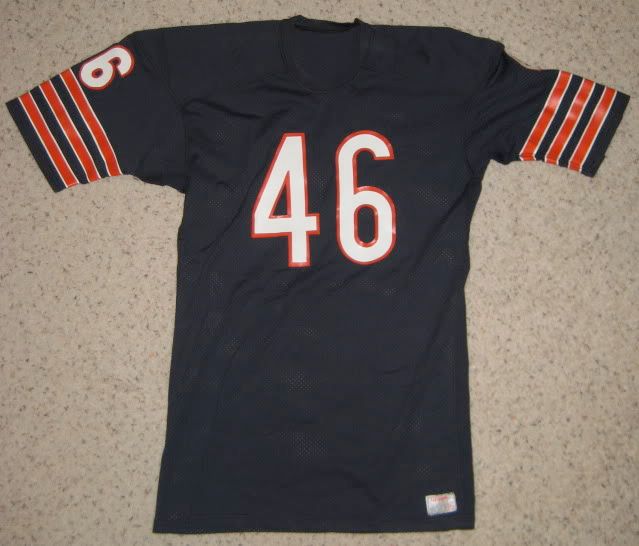
As most know, the defense got its name from famous SS, Doug Plank who had jersey number 46 when playing for the Chicago Bears back in the mid-80's.  Coach Buddy Ryan played Plank over the weakside tackle against 2 back teams that employed a TE.  The SS was the adjuster in the defense from this position.  As time moved on, people began to move the SS around.  Even Buddy's son Rex, has changed the original position of the SS in the defense.  Rex puts the SS outside the TE when aligning.  He feels this keeps the SS's alignment consistent and allows the SS to see his adjustments quicker.  This is what I originally advocated, and I'm sure with the NFL talent that Ryan has, along with the large amount of time given to coaches to work with their players at the NFL level, Ryan has little to no trouble teaching his system.  However, at my level, where we get a grand total of six hours (if we're lucky) of practice per week before gameday, things need to be quite simpler.  So, I opted to move to the alignment I found in a Boston College defensive playbook.  The defense they ran was based out of the 3-4 and simply put the SS inside the TE as the seven technique.  I had my doubts about this alignment, but since then I've seen just how much teaching I've eliminated by doing so, and have quickly come to enjoy this new alignment (and subsequent corrections in my playbook). 


As you can see, remove the TE and the "box" players remain the same with the SS as the 7 technique.
 
One thing to point out though, NONE of our opponents have run with a TE so far this season.  We are in a "spread to run" league where everybody feels they are Appalachian State or Urban Meyer, so we see very little TE sets.  So this basically translates my defense into a double eagle nickel package, with two outside safeties (OSS's) taking the brunt of the adjustments in our man coverage scheme (ok, it's just cover 1).  Anyhow, the OLB's in my defense (shown as S and R in the diagrams) only have to learn a couple of techniques, where before, my OLB to the TE side had to learn how to cover a TE man to man from the seven technique position.  The SS had to learn the OLB's job was well as learning how to cover displaced receivers man to man.  This led to a lot of overlapping teaching, but too much of a job description for both positions.  So, by moving the SS inside to the seven technique, I effectively eliminated any teaching time teaching him how to force, play boot, reverse, cutback (BRC) on runs away and simply had to teach him to cover a TE man to man from the seven technique, as well as man coverage on displaced receivers.  The OLB's job was made simpler too by teaching him one consistent alignment.  I align my guys one yard outside the EMOL, and keep it at that.  Now they play quicker, faster and with less of a thought process, which is EXACTLY what I as a coach strive for.


Play Faster!!!!

So, as I'm writing you this, I'm eating my words on my original stance on the position of the SS in the 46.  I think all three philosophies have merit, however, when applied "to grass", I like Boston College's version for the simplicity it presents in teaching the concepts based on what player's jobs are.  Ok, so hopefully I didn't steer anybody in a direction they are cussing me for, but if I did, shoot me an email and we can talk.  Otherwise, enjoy and gloat in the joy of me eating my previous words.


Well the grind is on, as most of us are entering mid-season.  I need some help, especially from youth coaches.  We are struggling to keep our practices from being a grind to the kids, and we need something fun and "lifting" to do in practice.  If you have any ideas please shoot me an email at footballislifeblog@yahoo.com .  Any information would be greatly appreciated.  Keep working fellas, keep your eyes on that prize!

Duece

The Strong Safety in the 46 Bear and 46 Nickel Defenses


As some of you know, from a previous post, I had some success (I do use that term relatively) with the 46 Nickel this past season.  Since using this defense, I have been enamored with finding out more information on its father, the Bear 46.  I have dug high and low and have come up with some very good resources, that have led me to some very insightful research.  The one thing that sticks out in my mind is the placement of the strong safety in this defense.  I will not go in to history here much, but as a lot of you know one of the key elements to Buddy Ryan's historic 85' Chicago Bears' Defense was the play of strong safety, Doug Plank.  With this position being so critical to the defense, it had me wondering why there were so many variations on the placement of this player.  It is hard to find any information on the 46, that has the strong safety in the same position.  So I thought a post about the pros and con's of the alignments of the strong safety were necessary.  I will also shed light, as I usually do, on what I did, and why I did it, so hopefully you can make an informative choice when placing such a critical player.


Early Years...The Beginning
Buddy Ryan's original position for the strong safety (SS) was at the weak side 40 technique.  There's much argument as to why Ryan put the SS here, however there is no doubt that this early alignment has since been challenged.  I can only speculate, but because the SS was in the box to the weak side, it allowed him to adjust to communicate with the linebackers (LB's) easier when and where he was adjusting to.  I'm sure there are other more concrete reasons why Doug Plank was placed in the weak side 40 technique, but for the purpose of this article, I will simply look at the pros and the cons of the alignment.


Pros
The Pros of the alignment are, in my opinion, very slim, as I did not utilize this alignment (well I sorta did since it WAS a safety for me, however it was NOT my SS, it was my WS).  The pros are as follows:
  • SS is in good position to communicate his adjustment/assignment to middle linebacker (MLB) who can then adjust the front accordingly (Jayhawk adjustment).
  • SS is in good position to walk out and cover a displaced #2 to the weak side.
  • SS is in good position to defend the run, and is well protected by the Nose, weak 3 technique and the wide nine technique defensive end.
Cons
  • SS is in poor position to see adjustment threat to the weak side, or handle motion away from the backfield to the strong side of the formation.
  • SS is not typically a run first defender, yet is aligned in the box, and such schemes as Power O, or Power G can exploit a weak run defender on the weak side of the defense.
  • SS has more to learn from this position.  His skill set is as follows:
    • Read and react to keys like a LB.
    • Cover receivers man to man.
    • Drop off in zone coverage.
    • Blitz from depth.


Strong Safety as the Seven Technique
The latter point will be argued in other sections of the article.  Basically, Buddy Ryan's traditional alignment is fine, but I think there have been other methods proven to be slightly more economically in their placement of the strong safety.  The first I will discuss, is one method I found in an old video about Boston College's version of the 46.  At one time, apparently BC ran their version of the 46 with 3-4 personnel.  BC placed the SS in the seven technique position, normally occupied by the Charlie LB (weakside linebacker) in Buddy Ryan's original scheme.  I will now take a look at some of the pros and cons of the SS being in the seven technique alignment.

Pros
  • Only one defender has to learn a new skill set, all 10 others play skill sets related to their original scheme.
  • SS is used to covering a defender man to man, whereas not all LB's are.  SS does not have to learn new skill set, and neither does LB.
  • SS can use quickness on LOS to beat slower, bulkier offensive linemen when blitzing.
Cons
  • SS still not in good position to get to adjustment assignments or adjust to motion.
  • SS must learn new assignment when facing the option (normally has pitch or alley assignment, now must take quarterback fitting inside the load block).
  • SS is usually undersized when compared to the LB being at the seven technique position.  This weakness can take its toll on strong side C gap runs as the SS is usually at a physical disadvantage to a tight end (TE) or offensive tackle (OT).
  • In zone coverage SS will drop to an inside zone, he does not normally drop to.  This puts more teaching time into teaching the SS additional zone drops from his normal assignment.

Boston College's 3-4 Version of the 46

The idea behind what Boston College is simple, only change one player and the rest of the defense can align and get after the offense.  I like it, but the idea of having a defensive back (DB) standing in the C gap, did not particularly sit well with  me.  So I looked at some schemes that had the SS set outside the TE to the strong side.  This fit very well with my 4-2-5 scheme as our SS was asked to play up and around the LOS on numerous occasions.  Now, let's look at the pros and cons of aligning our SS outside the TE to the strong side.


Base 4-2-5 Alignment


4-2-5 Version of the 46

Pros
  • SS only has to learn one new skill set, that of the outside rush.  Since we were 4-2-5 and ran TCU's Smoke Blitz, this was an easy install for me.
  • SS can easily get to his assignment of being the adjuster to the strong side, and can easily chase motion away from the backfield.
  • SS can drop off and cover an outside zone, which was his normal coverage responsibility in the 4-2-5.
  • Because of the SS being involved in blitzes in the original 4-2 scheme, he could also easily be taught blitz games coupled with the strong side LB to confuse the offense. 
  • SS in good position to defend the pitch on option, another carry over from his normal option assignments in the base defense.
  • No new reads or reactions need to be taught.
Cons
  • Further displacement from the box makes communication of adjustments more difficult.

I know, I'm biased, but I'm showing exactly what I did when looking at adding the 46 as a package to my defense last season.  I felt what I did "fit" what we were doing as a base defense, and allowed us to get into the 46 with little to no new teaching. 

The SS is a very important part of the 46 defense, and his placement is still up to your preference.  To be honest, no single way is correct or better, it's all in how you coach it up.  Just remember there are pros and cons to your decision, and that's why I posted this article.  For more information, check out my first post on the 46 Nickel, and go to by Scribd site and download some very good information!  Hope this helped, and I'm going to keep researching one of football's ultimate pressure defenses, the 46!!!


I do things MY way...


Duece
Something Shared...

This was shared to me before Parent's Weekend in college.  We were playing in a big conference game and our head coach shared this with us on Friday night prior to our Saturday afternoon game.  I don't know if it helped us win that next day or not, but I know it sure touched me, and it help motivate me.  I thought I'd share it with you as it's a good story nonetheless.  So here goes:

This was a story told by Bennett Cerf, a long-time sports announcer and was shared with me, so I thought I would share it with you.


Lou Little was head football coach at Columbia University. Prior to that, he held a similar post at Georgetown. One year there was a youngster on the squad who was no great shakes as a football player, but whose personality served as a morale booster for the whole team. Little was deeply fond of the boy. He liked the proud way he walked arm in arm with his father on the campus from time to time. If the team was far enough ahead, he even let him get into a game occasionally for the last few minutes of play.

One day, about a week before the big finale with Fordham, the boy’s mother called Lou on the phone. “My husband died this morning of a heart attack,” she said. “Will you please break the news to my boy? He’ll take it better if it comes from you.”

Little did what was necessary, and the boy went home sorrowfully.

He was back three days later, and came straight to Lou Little. “Coach,” he begged, “I want to say something to you that means an awful lot to me. I want to start in that game against Fordham. I think it’s what my father would have liked most.”

Little hesitated and then agreed. “O.K. son, you’ll start; but you’ll only be in there for a play or two. You aren’t quite good enough, and you know it.”

True to this word, Little started the boy — but never took him out. For sixty full, jarring minutes, he played inspired football, running, blocking and passing like an All-American, and sparking the team to victory.

Back in the clubhouse, Little threw his arm around the boy’s shoulder and said, “Son, you were terrific today. You stayed in because you belonged there. What got into you?”

The boy answered, “Remember how my father and I used to go about, arm in arm? There was something about him very few people knew. My father was totally blind. This afternoon was the first time he ever saw me play.”

Gentlemen, let’s let tonight be the first time they see us play.  Let’s let tonight be the first time our families see us play, and let’s let tonight be our night…together!


You never know when something like this will come in handy, so that's why I'm sharing.  I felt it was an awesome story.  Hopefully you can use it too and share it with your team as my coach did with me.

Football season is looming in the distance, hopefully you're ready!  If not, get up to speed with some new defensive posts over at Cripes!  Get Back to Fundamentals.  As usual, Brophy has put together some great posts (here and here) that will help you defensive guys dot your i's and cross your t's before the season.


Smart Football has an AWESOME article on the science of whether or not to go for two.  I find it hard to believe that an NCAA Division I coach, at the time of the game mentioned in the article, would make such a bonehead mistake, but he did!  I had a head coach that thought the exact same way.  Very good reading to start your season off with a game management topic. 


Also, remember it's very hot out there, keep those athletes hydrated and cool.  Football is Life, but it's not WORTH a LIFE, so don't push it too far as you start fall camp.


Good luck coaches!!!

Duece