Showing posts with label NFL. Show all posts

Muck City


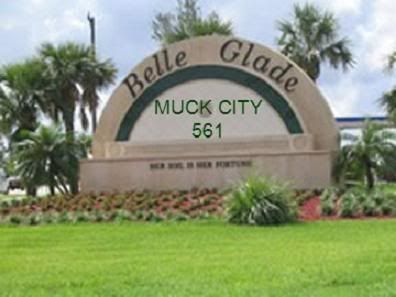
Since taking some time off at the end of spring football, I had a dear friend deliver me a gift.  A copy of a book about football in a town like no other.  That town is Muck City, as the book is titled, or better known as Belle Glade, Florida.  Reading this book was an eye opener to the way of life in Belle Glade.  I have coached teams that have played in that area, and even as a player played teams from over there.  Never did I know what went on in that area in terms of the history of not only the town, but also the football program.  This is no Odessa Texas, or De La Salle by any stretch of the imagination.  This is one of the roughest, poorest towns in all of America.  It's literally like driving into a third world country when you go there.  One thing they do well there is play football.

For those that don't know, "The Muck" is the area around Lake Okeechobee, that boast some of the most fertile soil in the world.  However, as much as the land grows, the townspeople taketh away.  In reading this book, it is amazing the despair, and the jealousy that abounds in a town like that.  One bothered me the most was how when an athlete would "make it", others would try to pull him down, or resent him to the point that many folks felt this star athlete "owed them something".  I can remember a quote from a movie, talking about people leaving poverty stricken areas and talking about the people there as "crabs in a bucket".  When one crab makes it to the top, the others will climb on his back and pull him back down into the bucket.  What's weird to me is, this is NOT the American way.  How does one even think like that?  I guess I'm wired differently, but the crabs in a bucket analogy, one I thought was just a joke, rings true throughout every ink laden page of the book Muck City.



The author, Bryan Mealer, does an excellent job in the telling of football history, daily life, and overall town history of Belle Glade.  He is very detailed in his accounts, and you can tell he spent quite some time living and working in Belle Glade.  My hats off to Mr. Mealer for writing such a quality book.  The historical parts drag you back to a past that talks of hurricanes and floods, the beginnings of a rough town carved out of the Everglades on the southern border of pristine Lake Okeechobee.  He also does an excellent job talking about the football history, even going back to when there was segregation and two schools in the tiny town.  The best part is when he describes the games themselves, or being at practice.  Mealer does such a good job, as a coach, I think I'm sitting right there with Jesse "The Jet" Hester listening tell the players much needed life lessons.  You actually get tensed up and nervous in the parts about the games, because of Mealer's attention to detail when describing them.  Mealer even knew the play calls and talked about the game as though he were a legendary coach himself.  Again, I have to tip my hat, because Muck City is a very well written book.


The part that hit home, and bothers me the most is the fact that a football coach, such as Hester, who went 34-6 at his time at Glades Central High School was fired six days after appearing in his second state championship.  This man had brought a sense of stability to a storied program, he'd make the young men believe in his coaching staff, and more importantly, believe in himself.  Only to have a community, one who I'd think would eat their own young if they had to, tear the ground out from underneath him.  Again, crabs in a bucket.  It is through a book like this, that you finally realize that "misery loves company" and people in despair are that way by choice, not because of some unseen force, or a greedy capitalistic society hell bent on keeping the poor man down, or even by politics.  These people are where they are because they do not have the intestinal fortitude to get out of their current situation.  It's sickening to read chapter after chapter of players who get out of Belle Glade, only to be ridiculed, made fun of, or even berated to the point of some never wanting to come back and help out there hometowns folk.  Who does that?  Having not lived it, I can tell you maybe I'm just some snooty outsider who doesn't have a damn clue how things work there, but I'm telling you, there are far worse places in this world that some of our great leaders, athletes and politicians have come from.  If they can do it, so can somebody from Belle Glade.


I don't mean to talk harshly about the town, but to be honest, the nature of things there are anti-American.  To embrace despair, show jealousy, and downplay the success of others is not what we were founded upon.  The one thing is true, some of the absolute fastest of the fastest football players come out of this region.  Great names such as Fred Taylor, Jesse Hester, Reidel Anthony, Rickey Jackson, and Anquan Boldin just to name a few.  The statistics of NFL players that have come from Belle Glade is staggering.  Another disturbing notion in the book is how players nowadays feel entitled to this treatment as though they are gods and all they have to do is "show up" to be recruited.  The game, in the book, takes an ugly feel to me.  It's not longer a game in Belle Glade, yet a means to an end.  This fact, is starting to branch out all across America I'm afraid.  What used to be a game among young men, is now a pipeline to money, fortune and fame, and it was trickled down into even our youth programs.  I have coached football long enough to see this demise and it is steadily withering away at my love for the game.  Coaches, especially head coaches, are now looked upon to facilitate the recruiting process, and severely scrutinized when the process breaks down or the athlete being recruited simply isn't "good enough".  The pages of Muck City echo this sentiment, even more than I imagined.

I recommend anyone read this book, but be prepared for an eye opener.  I may simply be so naive that I've been holding on to the game, trying to look at the landscape through glasses meant for an earlier time, and this book as slapped these glasses off my head.  I look at the game and wonder..."what am I doing here?".  I have seen this entitlement change drastically over the past four or five years, and like many I have thought it just a phase, but I'm afraid folks it's here to stay.  Several parts in the book have interviews with old war hero's from decades past that talk about the new wave of football players with great concern, and even some disdain.  For years I've heard even the old greats around my area talk the same way, and often chalked it up to "they don't understand kids", or "they're just too old to understand", but more and more I'm beginning to believe these old timers and what they are saying.  I guess that's because I'm becoming one of them.  I see what's happened to our game and the players in it, and see how the money has crept in and made everything about a once beautiful game ugly.  Everything has a peak, an apex if you'd say, and I think football is on a downward slope from it's once grand mountaintop.  I may be a lone voice, but football, much like our country, is crumbling from the inside-out.  The very foundation us as coaches preach has slowly been eroded away to where the whole thing stands to collapse.  I mean, read the sports columns everyday and you see where somebody or some team is getting slapped with a violation of some rule.  There's a fine here a fine there etc.  You can also read the high amount of arrests in both the NFL and college and now people turn a blind eye to it, as though "It's ok, he's a football player".  To this I say bullshit.  A case in point is the Tyrann Mathieu, better known as the Honey Badger, is now on the Arizona Cardinals roster, simply because "he can play".  He was arrested in possession of marijuana and failed numerous drug tests, but because he "can play", he gets entry into what is supposed to be the most hallowed fraternity in all of football, the NFL.  Am I the only soul in America that sees this logic as flawed?


I watched a program on Lombardi last night, and Jerry Kramer, legendary guard for the Packers said these words "They don't make men like that anymore", when talking about Lombardi.  I was thinking, you know, he's right, they don't.  These men are shunned as "old school", and tossed out and away from the game because players don't relate to them.  Players don't relate to them because they want everything handed to them, and the only thing Lombardi would hand you is a swift kick in the ass if you felt entitled to ANYTHING!  I often wonder what Lombardi would say if he could gaze upon the landscape that has become college and pro football.  My thinking is the famous line of "What the hell's goin' on out here!!!" would come to mind.  All I can say is, he would be gravely disappointed in us for what football has become.


Like I said, buy the book, it really speaks more volumes about football in general than probably Mealer knows or intended.  The book is a great look at football in a dark corner of America, where there are few fairy tales and even fewer happy endings.

Sorry I've been gone so long, but the new gig has me off and running, we have already started our summer stuff, but hopefully I can get some of these archived articles finished up and posted.  Have patience with me!


Duece

The Five Wide Offense

You really have five WR's on the field at one time!!!!!

A post on the Huey board about this very topic intrigued me enough to write a post about an offense that I do have some association with.  Now, I was just the defensive coordinator (who stole a playbook when I left) at the time, but I always paid attention to what my cohorts on the opposite side of the ball were doing.  The Five Wide Offense (FWO) was a very interesting concept at the time we were running it (late 90's early 2000's), because almost everybody we faced was a run the football, grind it out type of offense.  When I first joined the staff, we had a stud QB who could really zing the pigskin around, plus a very good group of WR's (we had 2 that signed D-1AA scholarships and the other 2 went D-III and NAIA).  Our OL, was suspect for most of the time, and we were not very good at running the football.  By the time I left, the offense had morphed into more of the traditional "spread to run" or "spread option" as our QB was more of a runner, and our receivers were not all that good.

What intrigued me about the offense was the setup and layout of the offense and just how simple it was for the players to understand.  I'm going to take you through and look at the basics of  the offense from the ground up.  Now, most people think FWO and think "Oh, you're just in Empty all the time, you're gonna get kilt!".  Well, that's not necessarily the truth.  As a matter of fact, from what I remember, we were in 2x2 and 3x1 a majority of the time.  Five wide, does not mean Empty, it means you are using five WR's on the field at any given moment.  The formations just put these five receivers in various positions that can create a mismatch or alignment problem for a defense. 

That kind of empty makes me sad...


Personnel

Offensive Line
The OL when I was a part of this offense was never very good, especially at run blocking.  We had a lot of finesse guys, or what I would call "tight ends that couldn't catch".  The OL was set up very similarly to that of a flexbone OL in that the center was one of the better OL, but maybe not a tremendously athletic OL.  The guards were whatever you had leftover after selecting the tackles and the center.  The tackles were lanky, rangy guys that could match up with speedy DE's or OLB's that would blitz off the edge.  Obviously the best OL was saved for protecting the blind side of the QB.


Receivers
In the diagrams below you will see the positions, and they are the X, A, W, Z, and B.  The W is purely a possession guy.  He does not have to be a speed demon, but is probably your best pure route runner of all five.  The Z is a "wild card" type guy.  He's a slot that can run the ball, but is good when matching up against underneath coverage guys.  Don't sacrifice on athleticism here.  The B and the A are almost universal in that they are basically RB's that can catch.  These guys need to be able to run and catch the ball.  They are by far the most versatile athletes within the offense.  The X is the stud, speed burner you have that can give defenses one-on-one match up problems.  He's by far your fastest receiver and probably the second best route runner you have.


Quarterback
I was fortunate enough to go through a couple of types of QB's in this offense.  Our first QB was your prototypical passer.  He was big (6'4" 200 lbs) and had a cannon on the left side of his body (yep, he was a Southpaw).  The second QB was more of a runner, or scrambler who was only 5'9" tall and about 175 pounds.  This guy would have been a great triple option QB, but he could also throw the hell out of the football.  The offense was made to fit around both of these guys, but some essential traits were still needed.  The QB obviously had to be a leader, but physically he had to be able to throw the football and throw it well.  There are some throws in this offense, that some of our younger QB's couldn't make.  They had to be developed to do so, and if you don't have the time to do that, then this is not your cup of tea.  The QB must also be able to make some plays with his feet, but he DOES NOT have to be RGIII either.  He just needs to be able to move and slide around in the pocket as you are usually only going to have five blockers.  He also needs to be able to get rid of the football QUICKLY.  With only five blockers, you end up seeing a lot of blitzes, and the QB has to see this and adjust to whoever is the hot route.


Formations and Alignment

There were four basic formations to the offense, and they were all named for weather events.  The alignments were very simple, if no direction calls were given, the W, the Z and the B would all align to the wide side of the field.  The X and the A only had to know where the W, Z and B were, because the X and the A would align on the opposite side of the offense.  If a direction call was tagged to the formation (example: Hurricane Left), then the W, Z and B all went to the call side, and the X and the A simply aligned on the opposite side.  This made alignment very simple for the players to pick up and to be honest, we very rarely ran out of left handed formations.  Here are the basic four formations:


Thunder
Thunder was the base set for the offense.  All routes and run plays were based from this formation.  Alignment-wise, the W would align as wide as the game plan or route tree called for and the Z would simply split the difference between the tackle and the W.  The X aligned the same way as the W did, while the A and the B flanked the QB, and had variable alignments.  If running routes out of the backfield the A and Z may align as wide as behind the tackles, whereas if running the ball inside they may align behind the guards.  The guard-tackle gap was the base alignment, and that was adjusted in or out based on the play being run.

Hurricane
Hurricane was by far the most popular of all our formations.  I would venture a guess that we were in this formation close to 50% of the time.  The only thing that changed between Thunder and Hurricane was that the A adopted the same alignment rules as the Z would.

Storm
Storm was the next most popular formation we ran, and is a standard 3x1 trips formation with back offset weak.  Here the Z reduced his split by 1/3 and the B aligned halfway between the Z and the EMOL.  The A simply took up his home alignment in the backfield as he would if running from the Thunder formation.

Tornado
Tornado was the least used formation that we had, however we did use it, and was particularly favorable later on with our running QB and using the A and B as "sweepers" to run the jet sweep and complementary plays off of jet action.  The W, B and Z simply aligned in Storm, and the X and the A aligned in Hurricane, so there was no new teaching of alignments to get in our Empty set.

Running Game

The run game varied over the years I was there from a more traditional inside zone and outside zone scheme to more QB iso and power runs, zone read, traps and jet sweeps in the later years.  I really think the sky is the limit when it comes to what you can do in the run game in this offense.  In the early years our bread and butter play was simply the draw to either the A or the B.  This was very good to us because of just how much we threw the football (our OC was a Spurrier guy, so we averaged about 70% passing to 30% running when I first got on campus).  Later, our bread and butter became the jet sweep and a QB trap play off of jet action.  Since our QB was such a threat to run the football, teams couldn't just attack and take away the sweep, because it would leave the middle of the defense vulnerable to QB trap.  QB draw also became a good play for us as well.  Anyhow, the run game is pretty much what you want out of it.  As mentioned earlier, we were 70-30 pass to run in my first two years there.  The last two years I was there, we moved to almost 50-50 and were quite balanced really.


Passing Game
The passing game, at that time, was unlike any I'd ever seen. I had always been a part of a route tree, or mirrored route concept system.  This concept system was unlike any I'd ever seen, however, it is eerily similar to what you are seeing nowadays in NCAA football and the NFL.  The first season I was there, our OC numbered the concepts zero through nine.  Midway through the season he was calling them things like "Middle" and "Wheelies" and the numbers were thrown by the wayside.  Later, he simply named all of his concepts, and as you can see some of them were pretty strange, but our kids understood them and we rarely had busted assignments due to guys not knowing what to do.  Here is the route concept tree from the Thunder formation.


Shoot was our bread and butter pass play.  We gained more yards and scored more touchdowns off this one concept than any other in our playbook.  The routes as they were named going from right to left are Post (W), Slant (Z), Swing (B), Shoot (A), and Takeoff (X). As a side note, these are not what I called these routes, these are the names taken directly from the playbook.


Smash easily was our second or third favorite route concept.  The routes are Slant, Corner, Takeoff, Corner, Hitch.  In this diagram, the A and B would probably have widened out behind the tackles in order to get a better release to run their routes.


Middle was a route concept that was later developed into a good sprintout concept.  The routes are Post-in, Wheel, Post, Swing, Slant.  We did not run this much as a drop back concept, but as I stated earned large dividends when sprinting out to the strong side of the formation to this concept (which I will explain later).


We did not use Zebra all that much, but later started sprinting out to the weak side (X/A side) and that later influenced some of my sprintout passing that I did from the flexbone.  The routes were Hitch, Post, Slant, Takeoff and Comeback.

Panther was a pretty popular route concept the entire time I was around the offense.  Our Z receivers loved it because they always seemed to be open on this one (we saw a lot of cover 3 in those days).   The routes are Post, Hitch, Shoot, Slant and Post.


Oreo was one that was run some with our pure passer, but not much.  Later with the running QB we sprinted to the strong side to this look for some good gains.  The routes that go with the Oreo concept are Out, Takeoff, Comeback, Post and Out.

Taco was one that when we began moving our QB around, we ran this to both sides with a TON of success.  I have no clue why it was called Taco, but that's what they named it.  The routes are Takeoff, Out, Post, Wheel, Post-in.

Hamburger was a rarely used concept, but I like the Smash-like qualities on the front side of the formation.  The routes are Now, Hitch, Corner, Hitch and Takeoff.  I know we would throw this if the defense was playing way off our W, yet later we simply tagged the receiver we wanted to run the Now route and ran it that way, which ultimately led to our not running Hamburger very much.

The JV DB coach used to always call this one "Stained Shorts" and he was right!  Streak we used quite a bit, but not as much as many would think.  It's also not the traditional Run-n-Shoot Streak concept either.  The B on this play was almost always open.  We hit the B for some serious gains off of this one.  The routes are Takeoff, Takeoff, Slant, Takeoff, Takeoff.

Tunnel is one we ran a bunch too, especially early on with teams trying to blitz our less-mobile QB.  The routes are Tunnel, Wheel, the B would block anybody trailing the W, Wheel, and Tunnel.

Now comes the really good part, and that's how these routes translated from formation to formation.  Our Shoot concept was our favorite and that is the one I will focus on for the next post.  I'm also going to talk about how we adapted to our running QB by giving him a pass/run option in the sprintout game and pass protection.  Stay tuned for more on the FWO!


Duece
I'll Be Back...


Well, it's been a crazy ride this season, and with only two games left, things will be over soon and I can get back to posting.  Do I ever have some stuff for you guys!  I'm working on the following:
  1. Key mistakes to avoid as a defensive coordinator
    1. Believe me folks, if anybody has screwed up and NOT followed this protocol this season, it's me.  I'm going to share some of those events and how we got the ship righted to finish strong.
  2. The 8-2-1 kickoff return scheme.
  3. Using nickel personnel to effectively defend the two back running game.
  4. Tackling drills.
  5. The unbalanced single wing and how this offense impacted myself, our coaches, and the players.


These are just a few of the things I've got in store, so don't forget about me.  In the meantime you can always check out my other blog, The Twelfth Man, where I get away from X's and O's and go a little more "opinionated".  Here are some other things you should be looking at as well.

Brophy has been back and has some great pieces, on Saban, Tony Franklin and La. Tech.  As always Brophy writes with a witty purpose, and does a great job explaining things.

Smart Football has been putting up some good stuff on the West Coast offense and how it helped Drew Brees attain his record.  Also some great articles on Geno Smith, Dana Holgorsen and some breakdown on the zone blitz coverage.  As always, Chris is a very talented writer and has links to several great video clips over on his site. 

Well, if you season is ending and you are not looking to the playoffs, once it's over, take a week or two and rest up as the whirlwind we know as the off-season will begin!  If your headed to the playoffs, congratulations, now keep your eyes on the prize!!!


Duece

Defensive Line Play in the 46 Nickel


Well, after using the 46 Nickel for a couple of seasons now, I'm getting my stuff together and preparing some manuals. The first one is the defensive line (DL) manual. Defensive line play is critical in any defense, so the 46 is no different. One unique thing about the 46 is the defensive line play. For most that haven't watched Rex Ryan's video entitled "Coaching Football's 46 Defense", you are missing out on defensive line play. Before I dive into the "how", I'm going to go to the why, which will result in us strolling down memory lane a bit.


As some of you know, I went to the 46 out of pure desparation two years ago. The top reason I used the 46, was the defensive line play I learned from Rex Ryan. Ryan's method of teaching and reacting to blocking schemes fits lesser athletic and lesser talented DL. Two years ago if you would have looked up "lesser athletic and lesser talented DL" in the dictionary, a picture of my front four would have been in there! Needless to say, we needed something to help us out, and in this case scheme was our answer. So now that you see the "why", let's look at the "how".

Speaking of history and memory lane, for those that know me, they know I'm a big Miami 4-3 guy. It's the defense I cut my teeth with. The technique I was brought up on, was pure block down, step down (BDSD), and to this day BDSD is still a large part of my teaching when it comes to defensive line. The problem with some of the basic fundamentals of defensive line play in the Miami 4-3 is that it does take some athleticism to do some of the things being asked of these players. For most of my career I've had those guys, however at my last stop, and where I'm currently at, we are devoid of anything remotely close to what I'd call an athlete on our defensive lines. Basically, we are "space eaters" that are good at getting in the way of things, rather than getting off a block and making a play. So, enter in Rex Ryan's teaching on how to play DL!


I have always taught, there are four blocks that a DL has to react to and they are:

  1. Base block
  2. Reach block
  3. Down block
  4. Pass block 
Ryan does not do this, he teaches two very simple rules.  Don't get reached, and don't allow the jump-through (known by most as the scoop block).  So in essence he's taken the system I (and many others) learned and cut it in half.  Yes, I know pass blocking is the same for both, but that's a whole different topic.  Ryan lumps the base block and the reach block together, cutting the teaching down for both.  The down block is also treated like the scoop block, so no new teaching there either.  Ryan refers to this as "generic coaching".  What this means for those that are DL coaches, is you teach only a couple of sound reactions to blocks, and it has to do with basically the direction of the OL the DL aligns over.  You really cannot ask for a more simplified system. 

In 2009 this is just what we needed, as we were not good enough to react to four different blocks, yet we could master the two that Ryan taught.  The reads weren't the problem though, as much as the movements themselves.  Ryan teaches simpler, more effective movements and reactions to blocks, than some of the older, more traditional schemes do. 

Ryan goes further in his discussion on dividing blocks into two categories, rule blocks and reacitonary blocks.  The reach, scoop, and double team fall into the rule block category, while the fold, trap and pass blocks fall into reactionary blocks.  The reactions to all these blocks is still only 2 movements, which is the basis for the simplicity behind the way Ryan teaches his defensive linemen.  This worked perfectly for us, because we felt our DL could handle having their movements, basically cut in half.


Probably the most eye-opening of Ryan's teaching methods is his famous "hips to the hole" reaction.  Many schemes, such as the one we were teaching, focus on the DL's head and hand placement.  Ryan teaches the hips to the hole method of defeating the reach block and double team.  What this means, it that instead of the traditional teaching of "run with your gap" (the DL's gap moves with a reach block, so he must run to maintain it), Ryan teaches to swing the hips in the direction of the reach, thereby gaining leverage on the blocker and filling the gap with the DL body.  The traditional method, has the DL use a push-pull technique attempting to run with the blocker and keeping the DL's head in the gap, with the hips trailing behind.  When you look at it, the OL has all the leverage because the DL only has his head an one arm to stop the OL, whereas with Ryan's method, the DL is using all of his body and both arms to styme the OL and keep the gap from widening.  Again, the game and technique boil down to simple physics!  Sure, a good DL should be able to run with his gap, maintaining leverage, but after teaching both, with sub-par athletes at the DL position, I can tell you, Ryan's method is much better for those suffering from the LOFT syndrome (Lack of Freakin' Talent). 


The double team only gets tweaked ever so slightly, and that is by having the DL overexaggerate the swinging of the hips into the OL that is attempting to overtake him.  This stalemates double teams, because of physics once again.  The DL makes himself wider, thereby creating a larger "clot" in the gap, which is tougher to move than if he were to drop and try to make a pile.  Plus, if he drops to make a pile, you are trading one for two, not what you want on defense.  This method of defeating the double team also kills the combo block.  Looking at your typical three technique, if they are trying to combo and get an OL on the LB, the DL prevents this by grabbing one of the OL and swinging the hips into the other.  The hips, force the trailing OL to have to go around the DL, thereby losing blocking leverage on the scraping LB.  This is where the technique paid off for us.  We were getting our LB's killed on combo blocks because our guys were trying to be penetrators (which we taught), and once we switched our undersized LB's were able to fly to the football. 


To defeat the scoop blocking scheme is not all that much different than the reach block, as again, the DL is using simple physics against the blocker.  The DL shoots the hands into the OL as he feels the scoop block working away from him, he simply latches on to the OL and utilizes a push-pull technique which does one of two things.  First it slows the blocker's momentum down, which is a key element to scoop blocking (just watch Georgia Tech's OL).  This keeps the blocker from being able to gain leverage on a scraping LB.  The other thing it does, is prevent the DL from being cut, and frees up the DL to chase the play. 

These techniques are very easy to teach, but at the heart and soul of both techniques is the hand play of the DL.  I think hand play for DL is an extremely underrated technique.  Looking back, you will see the hand placement of the DL is critical.  When defeating the reach, it is imperative that the DL punch his hands into the near shoulder and sternum of the OL so as to styme the OL's movment so the DL can swing the hips and gain leverage.  If there is no punch, the momentum of the blocker is not stopped and the hips cannot be swung into the gap.  The jump through utilizes the hand placement even more so.  The DL must again, shoot the hands, so as to slow the momentup of the scoop blocker, and then be able to pull himself by and behind the blocker. 


I know that sounds quite complicated, but it's not.  To be honest neither style of DL technique will work with poor hand placement.  This is why I say, hand placement and proper punch technique are often overlooked and undertaught. 

The reactionary blocks are even simpler than the rule blocks.  Ryan states there is basically no wrong way to play these.  I had a hard time wrapping my head around this concept because my entire coaching career I'd been schooled in one thought of DL play.  But when you watch the techniques on the video and he describes the various methods of defeating these reactionary blocks, it really opens your eyes.  What it means to the DL coach is, let your guys play.  I think all coaches at some point in their careers are guilty of "overcoaching".  Ryan, I'm sure, has fell prey to this too, and has seen the light, as against the reactionary blocks he just lets his guys play.  This really makes teaching the DL simple, but at the same time, is highly effective.  A good example of this is the outside fold block on a three technique.  There are two very simple ways to attack this scheme.  The DL, if quick enough, can get off the ball and get in the hip pocket of the puller, thereby putting himself right in the gap being attacked.  Nothing wrong with that!  Now, say your DL is a bit of a bulkier guy (like ours were), there's nothing wrong with the DL "chipping" or clubbing across the face of the down block either.  This puts the DL right back into the gap where the offense is attacking.  As you can see, the two methods are equally effective, and since Ryan let's his guys play it, the players are playing to their abilities and not being forced into a scheme that they cannot execute.

Some of the other basic philosophies of the 46 DL are very similar to other defenses I've read about.  Ryan does not elaborate much on stances, other than the DL should be comfortable and able to move laterally.  Ryan does talk about using short choppy explosive steps rather than big steps in order for the DL to keep his balance.  One topic Ryan states is the abiltiy of the defender to neurtralize the blocker.  He does not ask his DL to create a new LOS, but rather maintain the LOS, which can be seen in the clips.  This maintenance of the LOS, means the LB's are free runners and able to attack open windows in the offense. 


When we made the jump to the 46 Nickel, the DL play was the top reason we made the switch.  The results were immediate, in one week we made a huge turnaround in our DL play, and the film grades showed.  Obviously there are some other nuainces to DL play in the 46, but the heart and soul is the technique shown here.  I never knew much about these until I bought Rex Ryan's book on the 46, as well as the DVD.  Both of these are must buys for anybody learning about playing the 46 defense.


Well, the offseason has begun.  Coaches are tweaking offenses, and defenses and players are hitting the weight rooms.  This is not a time to be standing still!  Recruiting is also in full swing, do your seniors a favor and work your tail off for them, just like they did for you.  You never know just how much that means to your players.  Hope everyone is off to a great New Year. 


Duece

P.S.- I need some good punt block info.  If anyone is willing to share, please, hit me up!!!


Suggestions?


I was thinking, with the New Year ringing in, what suggestions would you have for the site?  I'm always interested in taking my audiences' temperature, so send me an email at footballislifeblog@yahoo.com and let me know what suggestions you have.  Currently I'm still working on the 3-4 defense and the single wing offense.  If you have any information you'd like to pass along, drop me an email.  Anyhow, here's some links to keep you going until my next post.


Here's a good post on the adaptation of the flexbone offense.  I think we are really seeing this offense coming into it's own, and there is no doubt the triple option has made its way back into the limelight of college football.  As always good link from Smart Football to Grantland.


Compete in all Things has a good post on the 3-4 defensive line.  If you're like me and trying to learn more about this defense, then you will want to read this post.  Also if you are like me, finding information on the 3-4 is like finding the Holy Grail!  Good post Mariner!


Coach Hoover really hits home with his latest piece on Tim Tebow.  I don't get all the haters our there, but to be honest, ol' Hoover goes into depth on what he believes is happening to the Denver Tebows...er...Broncos.  I think he's dead on with his opinion here, and I feel the EXACT same way.  Maybe I'm a little cynical, but I do believe in the power of belief, and I do believe that one person can make a difference.  Such is the way with the Broncos.  You cannot deny that the Broncos are not a changed football team.  What makes this even better, is how traditional NFL analysts cannot stand how he's able to be successful.  I also think there needs to be some kudos to head coach John Fox.  He at least had the wherewithal to start Tebow and give him a chance despite all the detractors.  Hey, desperate men sometimes do desperate things.  I hope the ride doesn't end with a few wins either, I'd like to see the Tebows playoff bound!!!  That would be a VERY nice Christmas gift for me.


For those that don't go to Gridnotes to find out your latest update on all your favorite football blogs...GET YOUR FRIGGIN' HEAD CHECKED!!!!!  What a great setup over there.  You can find whatever you need, whenever you want it, and the site is cleanly done, hats off bro, I'll drink a Sam Adams for ya!  Great site, please check it out for all your information needs.  There's great links to articles I frequently check out.  No more searching through this blog or that, all blog posts are referenced and easy to find, again...hats off!


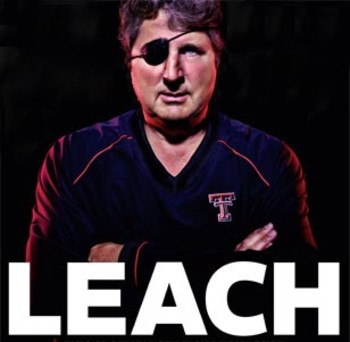
Spread football is at it again with some very useful Air Raid powerpoints.  I'm learning this Air Raid stuff daily, and have "overnight" become a Mike Leach fan (who'd have figured right?).  Take a look at these powerpoints, good stuff and well worth the read!


Well, this is probably the last post before the big day, so to all Happy Holidays, and have a very Happy New Year!!!!


Don't forget the Juice!

P.S. don't forget to follow me on Twitter @theduece02. 

Duece

Revolutionary Safeties and Quarters Coverage- Smart Football/Grantland


Good article on the revolutionizing of the safety play in the NFL.  This has been important to the success of many teams down through the decades as most often safeties are asked to be some of the most versatile players on the field.  

Nothing like versatility!

From playing the run to covering receivers in both zone and man coverages as well as rushing the passer, safeties like Polamalu and Ed Reed have revolutionized the game.  Their ability to do this has been greatly enhanced in the invention of Quarters Coverage.  Read more over at Grantland.

Looks like the Huey board is up and running, thanks Coach Huey for all you do!!!  Thought I was going to have to medicate myself this past weekend...oh wait, I did!


Also, for all you Tebow haters out there, really?  Yes he looked ugly at times, but he's a rookie quaterback in the NFL, don't forget that.  Please also don't forget he's not responsible for pass protection, catching passes that he throws, hanging on to the football he just handed off, or stopping the opponent's run game.  Tebow did just what he was drafted to do, make those around him better.  Isn't this what you want out of the most important postion on the football field?  I think so.  I didn't really think his throwing motion looked that awkward, but hey, being a Gator fan and alumni, I'm biased!


Well, one more game to go for us!  No matter what level I coach, or what the record is, the end of the season still sucks.  I always miss the guys I coach, no matter how they played, or how the season went.  Is that weird?  Hit me up and let me know what you think at footballislifeblog@yahoo.com.  Hope all of ya'lls seasons went well, and those headed to the playoffs, now's not the time to let off the gas, keeping pushing...full steam ahead.  For those with less than stellar season, get ready for the off-season, as the time is NOW!


Keep your foot on the gas baby!

Duece